
- Home
Press release from the 79th Cabinet session
Press release from the 79th Cabinet session

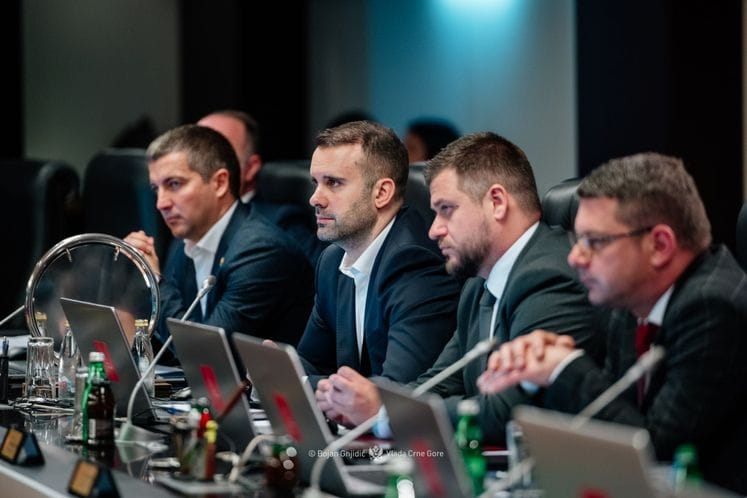
The Montenegrin Cabinet held its 79th session, chaired by Prime Minister Milojko Spajić.
The Cabinet adopted the Draft Law on Amendments to the Law on Court Experts. In the context of meeting obligations defined under Benchmark 4 of Negotiation Chapter 3 – Right of Establishment and Freedom to Provide Services, Montenegro is required to amend its national legislation to eliminate all citizenship requirements for access to and exercise of the freedom to provide services, except those justified and proportionate in line with Article 51 of the Treaty on the Functioning of the European Union (TFEU). According to the proposed amendments:
- Article 1 provides that a court expert may be appointed from among citizens of EU Member States, EEA countries, or the Swiss Confederation.
- Article 2 stipulates that such appointments shall apply from the date of Montenegro’s accession to the European Union.
These amendments are intended to align the Law with Directive 2006/123/EC of the European Parliament and of the Council of 12 December 2006 on services in the internal market.
The Cabinet adopted the Decree amending the Decree on the Conditions, Method, and Dynamics of Implementation of Agricultural Policy Measures for 2025 – Agro-Budget. The amendment refers to subsection “2.3.2 RURAL DEVELOPMENT AND INFRASTRUCTURE CONSTRUCTION”, specifically within the “Measure Description and Support Criteria” section. The change is made to simplify procedures and ensure more efficient and accessible implementation of the measure.
This measure provides support for improving rural infrastructure, specifically for:
- Construction, adaptation, reconstruction, and equipping of new or existing local infrastructure (roads, water supply, electricity, and related infrastructure) that connects individual or groups of rural households, provides access to katuns (seasonal mountain settlements), or supports on-farm infrastructure;
- Projects aimed at the development of the electrical grid in rural areas and solar energy usage for public purposes at the local level;
- Projects supporting the operation of machinery rings;
- Other rural infrastructure projects;
- Infrastructure projects involving facilities of general public interest in rural areas.
Support will also be provided for the purchase of a continuous production line for olive oil and related equipment for the Olive House in Bar, covering 50% of the procurement value. Municipalities will be invited to submit three priority projects under this measure. Project proposals from local communities, citizen groups, or registered farms must include a location description, photos, investment estimate (with pro forma invoices), justification (highlighting the number of beneficiaries and agricultural land affected), implementation responsible person, and valid bank account.
The Cabinet adopted the Programme for the Development and Promotion of Crafts for 2025. The key goal of the Programme is to stimulate the growth of Montenegrin craftspeople by providing financial support for the purchase of equipment/tools/raw materials used in craft activities and to encourage formalization of their businesses. The programme aims to:
- strengthen the competitiveness of existing craftspeople,
- increase the number of registered craftspeople,
- support beginners in crafts,
- promote entrepreneurship among women and youth involved in crafts, and
- support craftspeople in the procurement of raw materials.
The total budget allocated for the Programme is EUR 300,000, and implementation is organized through three components:
- Component I
Financial support for the purchase of equipment/tools covering up to 70% of eligible costs (excluding VAT), with an additional 10% support for craftspeople from less developed municipalities and for women and youth up to 35 years of age. - Maximum support per craftsperson: EUR 14,000 (an increase compared to the previous year)
- Minimum support: EUR 1,000
- Component II
Financial support for the purchase of equipment/tools for newly registered craftspeople, covering up to 80% of eligible costs (excluding VAT), with an additional 10% support for craftsmen from less developed municipalities and for women and youth up to 35 years of age. - Maximum support: EUR 6,000
- Minimum support: EUR 1,000
- Component III (New in 2025)
Support for the purchase of raw materials covering up to 80% of eligible costs (excluding VAT), with an additional 10% support for craftsmen from less developed municipalities and for women and youth up to 35 years of age. - For sole proprietors: up to EUR 1,000
- For micro-enterprises: up to EUR 500
The support is based on a reimbursement model, meaning that the craftsperson initially finances 100% of the total costs for the approved activity. After completion, submission of the necessary documentation, and mandatory monitoring, the Ministry of Economic Development reimburses a portion of the costs.
The Cabinet adopted Programme for Enhancing Competitiveness of the Economy for 2025. In line with the Government’s 2025 Work Programme, the Ministry of Economic Development has prepared the Programme for Enhancing the Competitiveness of the Economy for 2025. The Programme aims to further develop micro, small, and medium-sized enterprises (MSMEs) and boost their productivity, contributing to the creation of a more resilient, competitive, and export-oriented economy. The growth and participation of MSMEs are crucial for the future economic development of Montenegro, as they represent a significant share of economic activity both in the country and in the Western Balkans region and have a strong orientation toward the EU single market.
A total budget of EUR 3,500,000 has been allocated for the implementation of the Programme in 2025, to be distributed through three support lines:
- Support Line for Improving Production Capacities in the Food Industry supports co-financing of facility adaptation and the purchase of new equipment and/or machinery involved in production within Sector C of the Activity Classification. A total of EUR 2.85 million has been allocated. Support intensity:
- Component 1: For companies operating as of 31 December 2024 – from 50% to 70% of eligible costs (excluding VAT), with a minimum of EUR 25,000 and a maximum of EUR 150,000.
- Component 2: For newly established companies (from 1 January 2025 until the public call closes) – 50% of eligible costs (excluding VAT), with a minimum of EUR 15,000 and a maximum of EUR 50,000. - Support Line for Women Entrepreneurship with a budget of EUR 500,000, this line offers financial and non-financial support to businesses that are majority-owned by women, implemented through two components:
- Component 1 – Start-ups led by women: 80% or 70% of the approved subsidy (excluding VAT), from EUR 1,000 to EUR 30,000. If the requested amount is up to EUR 10,000, the company may receive 70% pre-financing; if the amount exceeds EUR 10,000 or if the company opts out of pre-financing, 80% reimbursement applies.
- Component 2: For businesses at least 51% owned by women and operating for a minimum of three years by the call’s closing date – 80% reimbursement of eligible costs (excluding VAT), from EUR 1,000 to EUR 30,000. - Support Line for Promoting Sustainable Health Development with a budget of EUR 150,000. This line supports investments in fixed assets – new equipment directly linked to the production or provision of services, and aligned with the company’s core activity code. Support intensity is 70% of eligible costs (excluding VAT), with a minimum of EUR 1,000 and a maximum of EUR 30,000.
The Programme is based on a reimbursement system, where the company finances 100% of the costs up to the completion of the activity for which it applied. After submitting the required documentation proving the expenditures related to the contracted activity, the Ministry of Economic Development approves partial cost reimbursement.
The Cabinet approved the Proposal for a Basis for Negotiations and Conclusion of an Agreement between the EU and Montenegro on Montenegro's Accession to the LIFE Programme 2021–2027, and accepted the text of the Agreement. Montenegro aims to secure funding for environmental and climate action projects through participation in the LIFE Programme. The Agreement, effective from 1 January 2025, will remain in force as long as needed to complete all projects, fulfill financial obligations, and protect the EU’s financial interests.
The Cabinet amended the Decision on Determining Public Interest for Expropriation of Real Estate on the Territory of Kolašin and Andrijevica Municipalities for the Mateševo–Andrijevica section of the Bar–Boljare highway. References to the Andrijevica Municipality were removed due to changes in the route following community feedback and EBRD requirements. Expropriation in Kolašin will proceed in the cadastral municipalities Mateševo, Sunga, and Kraljske Bare.
The Cabinet adopted the Decision was adopted to declare public interest for expropriation in the Municipality of Andrijevica for the same highway section. Expropriation will take place in the cadastral municipalities Slatina, Gnjili Potok, Andrijevica, Krale, and Sjenožeta. Funds are provided for in the 2025 Budget Law.
The Cabinet adopted the Report on the conducted negotiations regarding the Agreement on Cooperation in the Field of Security and Support between Montenegro and Ukraine, and approved the text of the Agreement.
Additionally, the Cabinet adopted the Report on the completed negotiations for the conclusion of the Protocol between the Government of Montenegro and the Government of Ukraine on the amendment of the Free Trade Agreement, which replaces Annex II of the Free Trade Agreement—Rules of Origin of Goods and Methods of Administrative Cooperation, and also approved the text of the Protocol.
