- Home
Bečić and Ćulafić meet with young MPs of the CDU/C...
Bečić and Ćulafić meet with young MPs of the CDU/CSU parliamentary group in the Bundestag

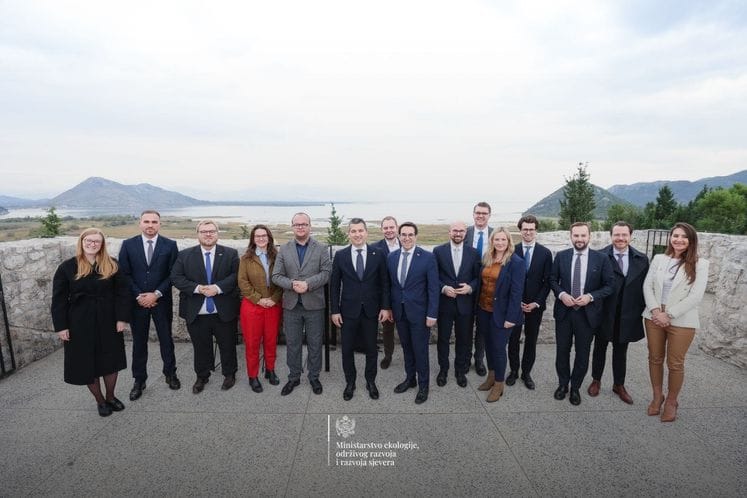
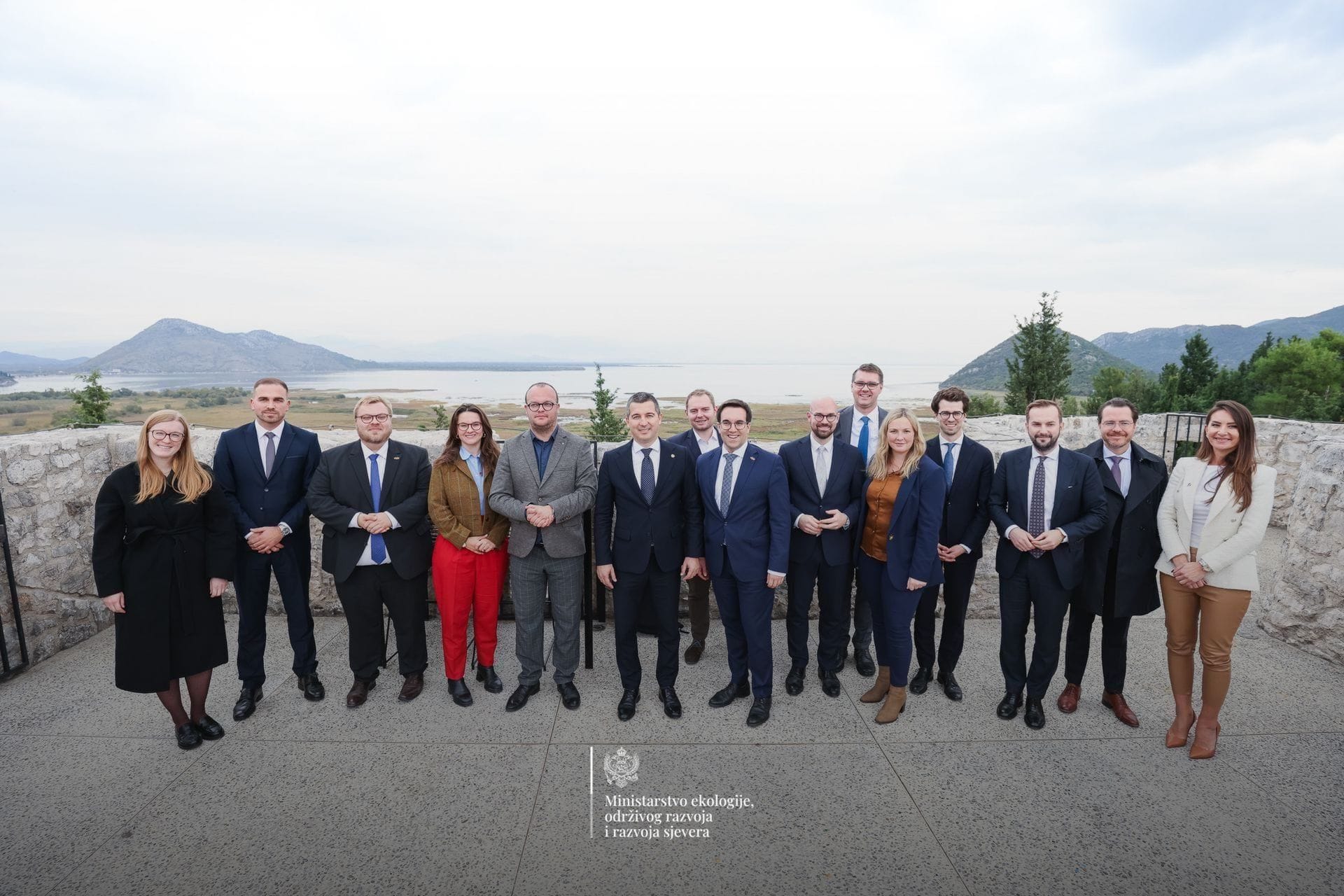
Deputy Prime Minister Aleksa Bečić and Minister of Ecology, Sustainable Development and Northern Region Development Damjan Ćulafić today hosted a reception for young MPs of the CDU/CSU parliamentary group in the German Bundestag at the fortress on Skadar Lake, as part of their official visit to Montenegro. The delegation also included representatives of the Konrad Adenauer Foundation, Florian Feyerabend and Jakov Devčić.
The meeting was attended by state secretaries from the Ministry of Interior, Dragana Kažanegra Stanišić, and from the Ministry of Ecology, Sustainable Development and Northern Region Development, Nenad Vitomirović and Zoran Dabetić, as well as the Director of National Parks of Montenegro, Marinela Đuretić, and other representatives of the Ministry of Ecology, Sustainable Development and Northern Region Development.
The talks focused on strengthening cooperation between Montenegro and Germany, particularly in the fields of European integration and reforms within the negotiation process, sustainable development, environmental protection, combating environmental and other forms of crime, security, rule of law, and enhancing the role of youth and inter-institutional cooperation.
Deputy Prime Minister Aleksa Bečić welcomed the German MPs, highlighting that they were visiting a country of exceptional natural beauty and warm hospitality.
Welcome to a friendly country – the most beautiful country in the Western Balkans – and the next member of the European Union in 2028, Bečić stated.
He emphasized that there are numerous shared values and common priorities between the two countries, noting that the current Government of Montenegro, which enjoys the strongest parliamentary support in the country’s modern political history, is fully oriented toward the future, reforms, and the European path – not the past.
Many years were wasted on issues and policies contrary to reform, progress, and the future. That is why, from the beginning of our mandate, we have been determined to implement the reforms that have long been awaited. For years, our integration process stagnated, which shows that this new generation of politicians – led by many young people unburdened by the past – is the only one capable of making a difference and unlocking Europe’s door for our country, said Bečić.
The Deputy Prime Minister particularly emphasized the Government’s focus on socio-economic policies and the decisive fight against crime and corruption. He pointed out that salaries and pensions – especially minimum ones – have significantly increased, while the public debt-to-GDP ratio has been substantially reduced. He added that Montenegro has made significant progress on its European integration path, having received the IBAR (Interim Benchmark Assessment Report), closed numerous negotiation chapters, and prepared many others for closure by the end of this year – contributing to the Government’s ambitious goal of closing all chapters by the end of next year.
Vetting, cleansing the system of crime and corruption, building strong institutions, implementing major infrastructure projects in transport and energy, strengthening the economy and citizens’ financial independence, successfully concluding our EU accession path – these are the core priorities of this Government. They unite the majority of Montenegrin citizens and overcome the politics of the past and traditional ideological divisions. That is why the European path enjoys overwhelming public support in Montenegro – and why this generation of politicians will not miss the historic opportunity to lead our country into the European Union, Bečić said, adding that Montenegro is currently achieving historic results in combating all forms of crime.
Representatives of the German delegation described Montenegro’s achievements as impressive, particularly considering the complexity of the reform process. They commended the country’s success in fighting organized crime and expressed full support for Montenegro’s European path, emphasizing that Montenegro represents a positive example for the entire Western Balkans.
In the continuation of the talks, Bečić announced the strengthening of joint projects with the European Union, praising in particular the cooperation between the Ministry of Ecology and the EU Delegation to Montenegro in the field of combating environmental crime. He noted that the formation of a specialized Police Directorate unit for tackling environmental crime is underway, and that the Supreme State Prosecutor’s Office has established an operational team to address this complex security challenge. He emphasized that it was this Government that identified the fight against environmental crime as one of Montenegro’s national priorities.