

- Home
Bečić meets Czech Ambassador on farewell visit
Bečić meets Czech Ambassador on farewell visit

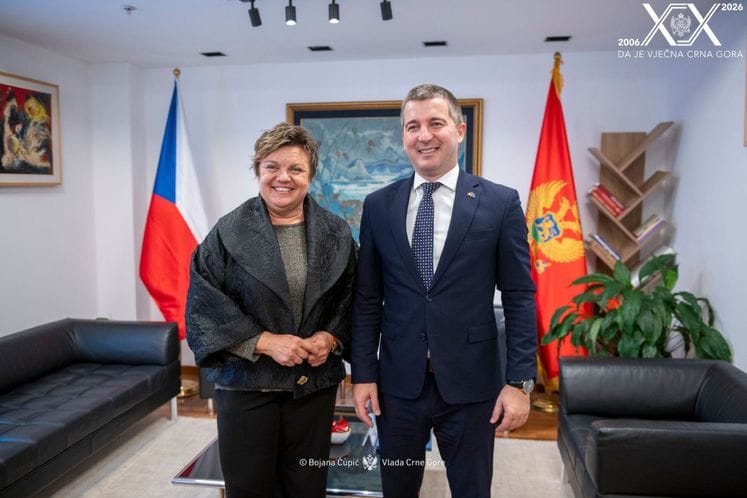
Deputy Prime Minister Aleksa Bečić received Czech Ambassador to Montenegro Janina Hřebíčková for a farewell visit, with whom he discussed the results of cooperation between the two countries, reforms in the security and defence sectors, strengthening institutional capacities and Montenegro’s European perspective.
Bečić noted that significant investments have been made in the security and defence sectors over the past three years, both through strengthening human resources and through the modernisation of equipment and working processes.
When it comes to the defence sector, the results can symbolically be seen through the example of the Montenegrin Navy. In just one term, this Government will have managed to complete all legal procedures across all institutions, oversee the construction process in France and, hopefully, welcome two new patrol vessels into Montenegrin waters next year. The works have been completed and a new Navy Command building, built to the most modern standards, has been opened. Not to mention fast patrol boats, unmanned aerial vehicles, vehicles and numerous other assets and equipment with which the Armed Forces of Montenegro are being continuously upgraded. We should also highlight the signing, several months ago, of the agreement between Montenegro and Czechia in the field of defence as a particularly important achievement, Bečić said.
He stressed that modernisation and strengthening of capacities must be accompanied by changes to old practices and institutional working methods.
Personnel reform is the foundation. We are strengthening the system by bringing in new, young people, while we have given the professionals already working within the system a free hand and our full support to apply the law equally to anyone who violates it. Without exception and without privileged treatment, the Deputy Prime Minister said.
Speaking about the integrity vetting process in the security and defence sectors, Bečić stressed that vetting has become one of the key instruments for institutional reform.
Legal mechanisms existed before, but they were not used. The competent authorities are now simply applying the law with the aim of removing compromised individuals and undue influence from institutions. This restores strength and motivation to professionals within the system, while restoring credibility to Montenegrin institutions and building the trust of the international intelligence community, Bečić said.
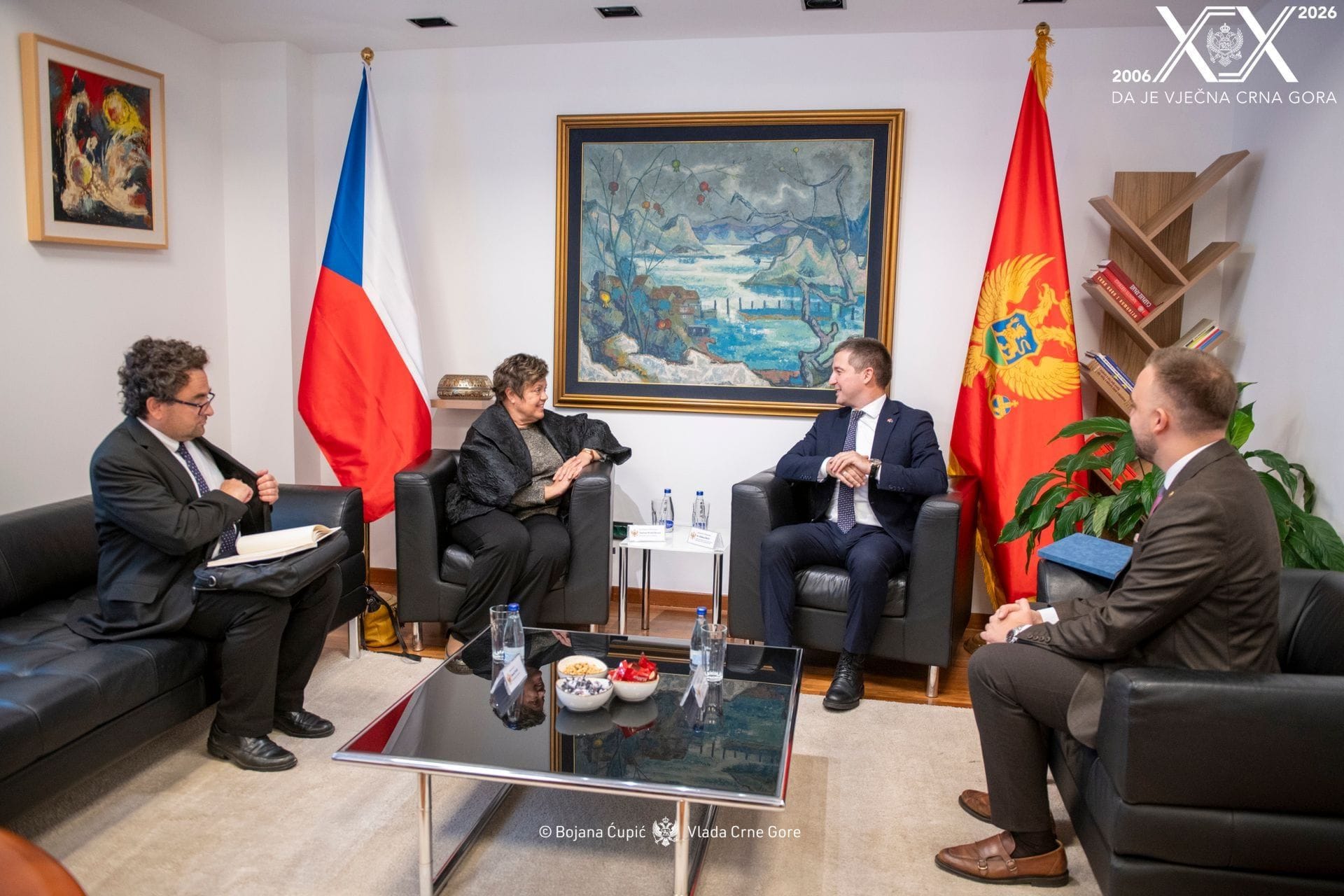
Cooperation with international partners in the security sector is at an historic high. This is resulting in historic operations, dismantling drug-trafficking, tobacco-smuggling and other criminal networks, and prosecuting the leaders, members and associates of criminal organisations. The essence of building the rule of law is that no one is above the law, and that combating the grey economy and confiscating assets from criminal structures strengthens the economic freedom of ordinary Montenegrin citizens, Bečić stressed.
According to him, the durability and resilience of institutions will be the true measure of the success of the reforms.
The system must rest on people and institutions. Politicians come and go, but institutions must endure. That is why our goal is to build a system that does not depend on individuals, but on rules that apply equally to everyone, Bečić said.
In this context, he particularly highlighted the principle of equality before the law.
Every Montenegrin, Serb, Bosniak, Albanian and any other citizen of our country, as well as every foreign national, if they violate the law in Montenegro, will have to answer to the State and its institutions. No one can be above the State, Bečić said.
Montenegro draws its strength from its diversity, which is our wealth, not a reason for counting people or resorting to primitive manipulation. That is why the foundations of a strong and resilient state are an economically independent citizen, a defeated criminal underworld, preserved social and political freedoms, and professional and modernised institutions, Bečić said.
And that is why you can be sure that economic growth, higher wages and pensions, and a determined fight against the mafia are the answer for a secure future to attempts to constantly return us to a dark past. That is why there are numerous attacks against those of us who uphold genuinely civic and progressive, anti-crime values, because the fight against crime and economic development, as the two top issues in Montenegro, disrupt the model of those who ruled for decades on the basis of the past, divisions and ethnic counting. But a truly civic, healthy and decriminalised Montenegro will ultimately dismantle those models and bring citizens many good news, Bečić concluded.
Ambassador Hřebíčková said that the results of the reforms in the security sector are visible.
The results in the sector you oversee, Mr Bečić, are truly evident and encouraging, while the public calls for young police officers are yielding results in reducing the staffing shortage within the Police Directorate, Hřebíčková said.
Reflecting on her diplomatic tenure and cooperation with five Montenegrin governments, the Ambassador said that she now sees a real basis for achieving the European goal.
Finally, during the term of this Government, we can see that the dream we all share – for Montenegro to become the 28th member of the European Union in 2028 – is within reach, this time with a real basis for achieving it, Hřebíčková said.
At the end of the meeting, the Ambassador also highlighted her special personal attachment to Montenegro. Over the past years, I have grown very fond of Montenegro and, regardless of all future professional developments, my affection for your country will remain, Hřebíčková said.