- Home
Bečić takes part in the 20th Jubilee Session of th...
Bečić takes part in the 20th Jubilee Session of the Parliamentary Assembly of the Mediterranean


Deputy Prime Minister for Security, Defence, Fight against Crime and Internal Policy Aleksa Bečić addressed the participants ahead of the presentation of the work of the First Standing Committee on Political and Security Cooperation within the framework of the 20th Jubilee Session of the Parliamentary Assembly of the Mediterranean (PAM), gathering around 250 participants from 25 countries in Budva.
Bečić stated that it is a great honour for Montenegro to host such an important international parliamentary forum in the year marking 20 years since the restoration of its independence and at a time when the country is achieving significant progress on its European path.
Montenegro is moving decisively along its European path. Two and a half years ago, this Government inherited an almost blocked EU integration process. Through joint efforts, we succeeded in unblocking that process, closing 11 negotiating chapters and bringing it into what can be called the very final stage, Bečić stressed.
Speaking about contemporary security challenges, Bečić warned that organised crime operates without regard for borders or divisions, which is why the response of states must be even stronger partnership and coordination.
Organised crime knows no borders. Organised crime knows no religions or nations. Criminals communicate with ease, disregard differences and quickly reach agreements in order to undermine systems and institutions. That is why my constant call is for international cooperation, for the exchange of information and data, because cooperation benefits us all. From non-cooperation and confrontation, everyone loses, while organised criminal groups become the ones who gain the advantage, Bečić stated.
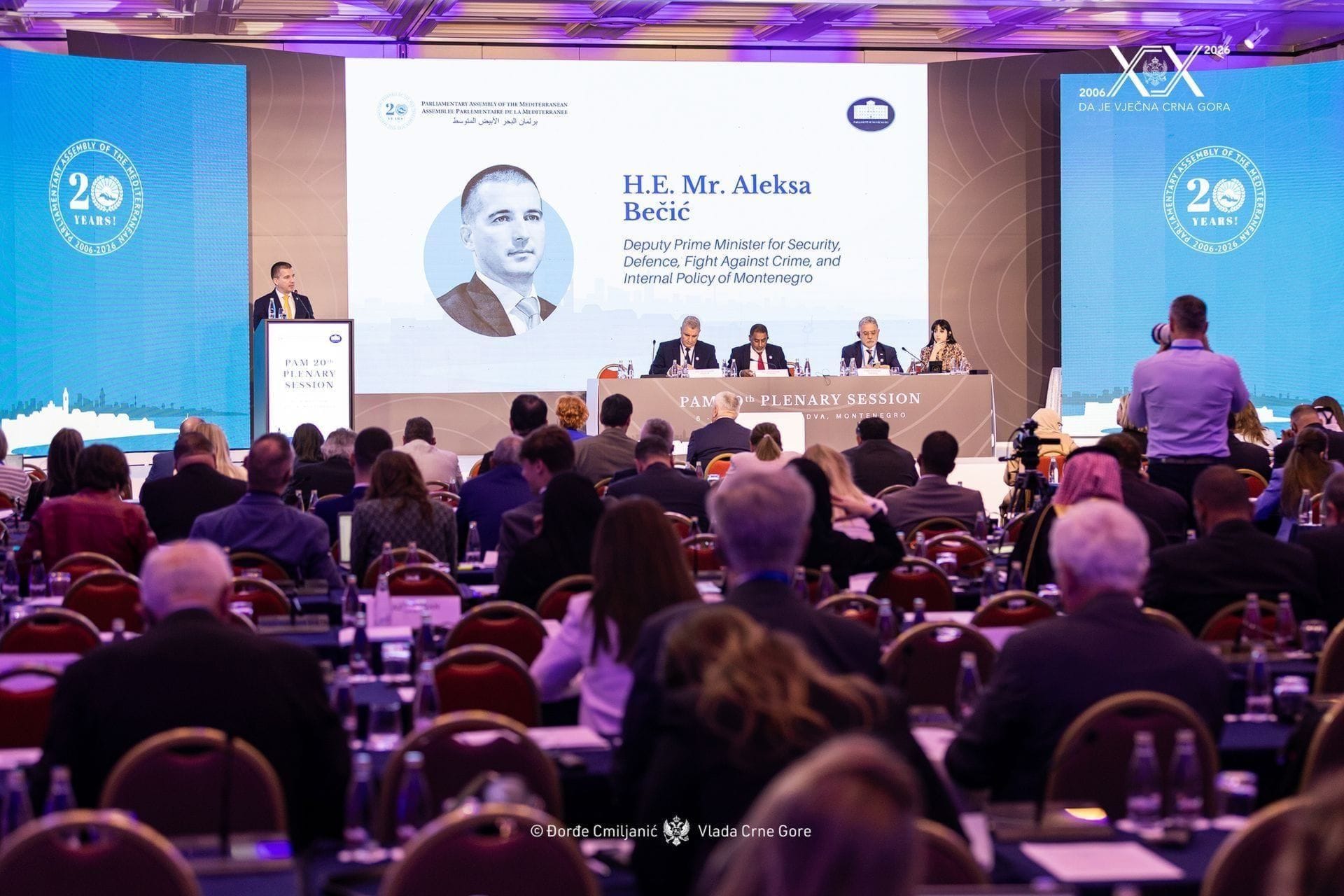
He emphasised that the key to a successful fight against crime lies in strengthening domestic institutions in terms of human resources, operational and normative terms, as well as in enhancing international cooperation.
Human resources are, of course, the essence. People are the foundation of everything. All other mechanisms are meaningless if you do not have the right people in decision-making positions. That is why, in line with the law, we are decisively implementing the vetting process and cleansing the system of undue influence and compromised personnel, because one rotten apple can spoil the entire barrel. One compromised individual can, for example, jeopardise operations that have been prepared for months, Bečić said.
He particularly highlighted the importance of creating opportunities for professionals and the younger generation.
It is important that people within the system now see that key institutions in the fight against crime are led by professionals, that professionals are managing processes and setting the pace. At the same time, we are opening the door to young people, giving opportunities to new individuals and new energy, in order to create a winning combination of sound experience and fresh energy, Bečić noted.
Speaking about the results achieved in the fight against organised crime and corruption, Bečić pointed to concrete institutional results and a historic level of international cooperation.
International cooperation today is at a historic maximum, and it has been the key to numerous decisive and effective operations against drug cartels, the tobacco mafia and other forms of crime. In Montenegro, there are already confirmed indictments or first-instance verdicts against numerous former heads and officials of the judiciary, prosecution, executive branch, security institutions, agencies and other institutions. Competent authorities in various sectors are demonstrating the state’s determination to heal institutions and create a strong and resilient system, Bečić said.
He particularly emphasised the importance of financially targeting organised criminal groups.
The essence is to deliver strong institutional blows to organised criminal groups, but also to deprive them of their financial power. During the past year in Montenegro, around two million square metres of various assets and approximately EUR 70 million in bank accounts belonging to individuals involved in criminal proceedings were frozen. Confiscation of illegally acquired assets is one of the most direct and effective blows against organised crime, Bečić stated.
Addressing modern challenges, he pointed to hybrid threats and the misuse of new technologies.
Hybrid activities represent a challenge of the modern age. Deceptions, lies and monstrous fabrications, assisted by modern technologies, aim to degrade systems and slow down reforms due to the enormous fear, panic and nervousness of organised crime caused by the state’s determination, numerous operations, arrests and prosecutions. In Montenegro, such patterns of organised crime and their accomplices only provide additional motivation for all officials and professionals to continue even more strongly, because ultimately no one can be stronger than the state, and the state is delivering powerful blows to organised crime on a daily basis, Bečić stressed.
At the conclusion of his address, the Deputy Prime Minister sent a strong message of peace, dialogue and a shared future.
It was encouraging to see here yesterday how high-ranking officials of countries that until recently had difficult and painful experiences are now sitting at the same table and engaging in this parliamentary dimension. We cannot change the past, but together we can shape a secure future. If we preserve peace, we can all emerge as winners. Where there is no peace, there are no winners, Bečić concluded.
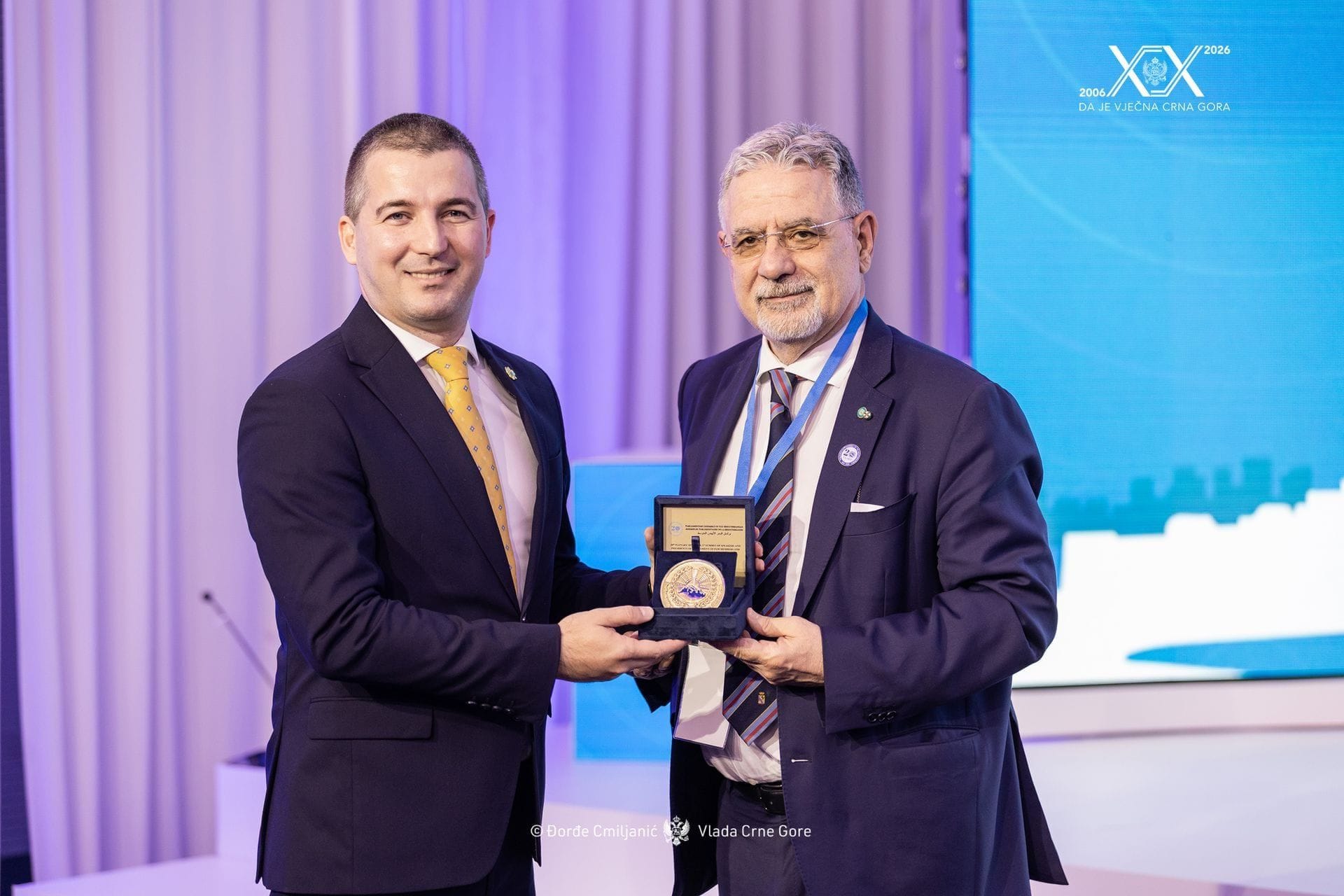
At the end of the event, the President of PAM presented Bečić with a plaque of appreciation.