

- Home
Higher Court decision in the “Telekom” case repres...
Higher Court decision in the “Telekom” case represents an important victory for justice, accountability, and institutional determination of the State

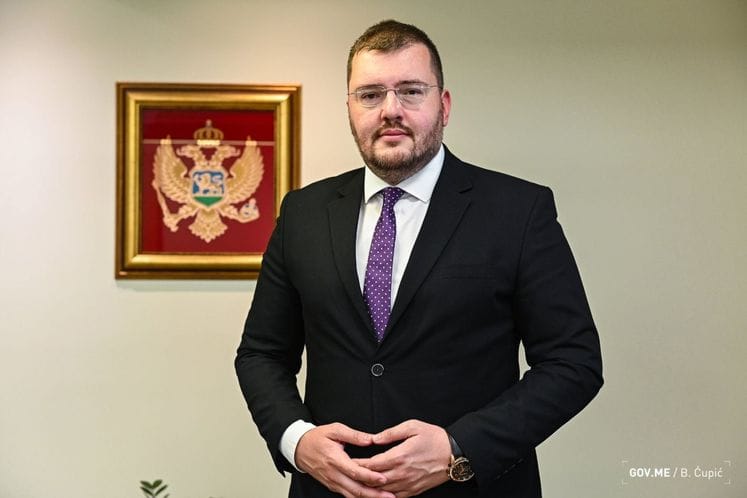
Today’s decision of the Higher Court that the statute of limitations has not expired in the “Telekom” case represents an important victory for justice, accountability, and the institutional determination of the state to confront corruption and abuses that caused damage to the public interest for years. This process was initiated following the firm position adopted by the Government at its session of 2 October 2025 to undertake criminal prosecution in the capacity of a subsidiary prosecutor on behalf of the State, as the injured party in this corruption affair.
On this occasion, it is important to underline the exceptional value of the legal interpretation and arguments presented by the Protector of Property and Legal Interests of Montenegro in the complaint submitted to the prosecution authorities. Based on these findings, the National Council for the Fight against Corruption, at its thematic session on the “Telekom” case, adopted a proposal recommending that the Government initiate criminal prosecution of those responsible for corruption-related criminal offences in the “Telekom” case, using the remaining and final legal mechanism provided under Article 59 of the Criminal Procedure Code, with the aim of ensuring justice and an institutional resolution to a corruption affair that has also acquired international dimensions.
From the very beginning, the Government of Montenegro and the National Council for the Fight against Corruption maintained a clear position that the State, as the directly injured party in this case, must not allow such a serious affair to be left to limitation periods, oblivion, or institutional passivity. For this reason, the State exercised its legal authority to initiate criminal prosecution in the capacity of a subsidiary prosecutor, guided solely by the interest of protecting the State and its citizens. This role is being carried out successfully, lawfully, and responsibly by the institution of the Protector of Property and Legal Interests of Montenegro, acting as the legal representative of the State.
The decision of the Higher Court confirms the correctness of the legal and institutional position taken by the Protector of Property and Legal Interests, as well as the decisions adopted by the National Council for the Fight against Corruption and the Government of Montenegro. It sends a strong message that the State will no longer remain silent in the face of attempts to avoid accountability and secure impunity for corruption at the highest levels.
The “Telekom” affair has become an international symbol of a system in which fictitious consultancy agreements served as a cover for secret arrangements through which state property and multi-million-euro interests were traded away beyond public scrutiny, as well as for the fabrication of evidence, as acknowledged before authorities in the United States by certain participants in the secret meeting held in Podgorica on 12 January 2005. More than EUR 7 million was allegedly paid through fraudulent consultancy contracts for corrupt purposes linked to the circle surrounding former Prime Minister Milo Đukanović.
Other participants in the secret meeting allegedly received privileges and unlawfully donated funds to the ruling party of the former regime, thereby acquiring the belief that their actions would remain unpunished. However, institutions are undergoing qualitative transformation, and the State is now acting decisively and no longer in the service of private interests. It can therefore be concluded that those involved in the “Telekom” affair prematurely counted on the expiration of limitation periods.
The fight against corruption has no alternative. Institutions exist to protect the public interest. Justice must not be abandoned. This case demonstrates a determination to pursue accountability to the very end, without selectivity, without political calculations, and without privileged individuals.
As President of the National Council for the Fight against Corruption and Deputy Prime Minister, I consider this an important step towards establishing full accountability and restoring citizens’ trust in the rule of law. Montenegro must become a country in which no major affair ends up forgotten in drawers, barred by limitation periods, or within a zone of impunity.
We will continue to insist on full institutional accountability and the consistent application of the law, because this is both a duty owed to citizens and an obligation towards the future of Montenegro.