
- Home
Ibrahimović at A5 Meeting: Energy security and cri...
Ibrahimović at A5 Meeting: Energy security and critical infrastructure protection key to regional resilience


Deputy Prime Minister of Montenegro and Minister of Foreign Affairs Ervin Ibrahimović participated today, on the margins of the 81st session of the United Nations General Assembly in New York, in the meeting of the Adriatic Charter (A5), dedicated to current security challenges and strengthening the resilience of the Western Balkans.
The meeting focused on energy security and the protection of critical infrastructure. Ibrahimović stressed that recent instability in the Middle East once again demonstrates how quickly a crisis in one part of the world can have economic and strategic repercussions across Europe and beyond, making energy an increasingly important national security issue.
Ibrahimović warned of the risks associated with long-term dependence on Russian energy sources and investments, as well as the challenges arising from China’s growing presence in strategic infrastructure, the energy sector and critical technologies, particularly with regard to ownership structures, financing, long-term dependencies and access to critical systems.
“Our objective should be to reduce strategic dependencies, diversify energy sources and infrastructure, strengthen connectivity with European energy networks, and enhance security screening of investments in critical sectors,” Ibrahimović said, underlining that A5 can play an important practical role by facilitating the exchange of information on threats to critical infrastructure and strengthening cooperation with the United States in the areas of energy diversification, infrastructure protection and trusted technologies.
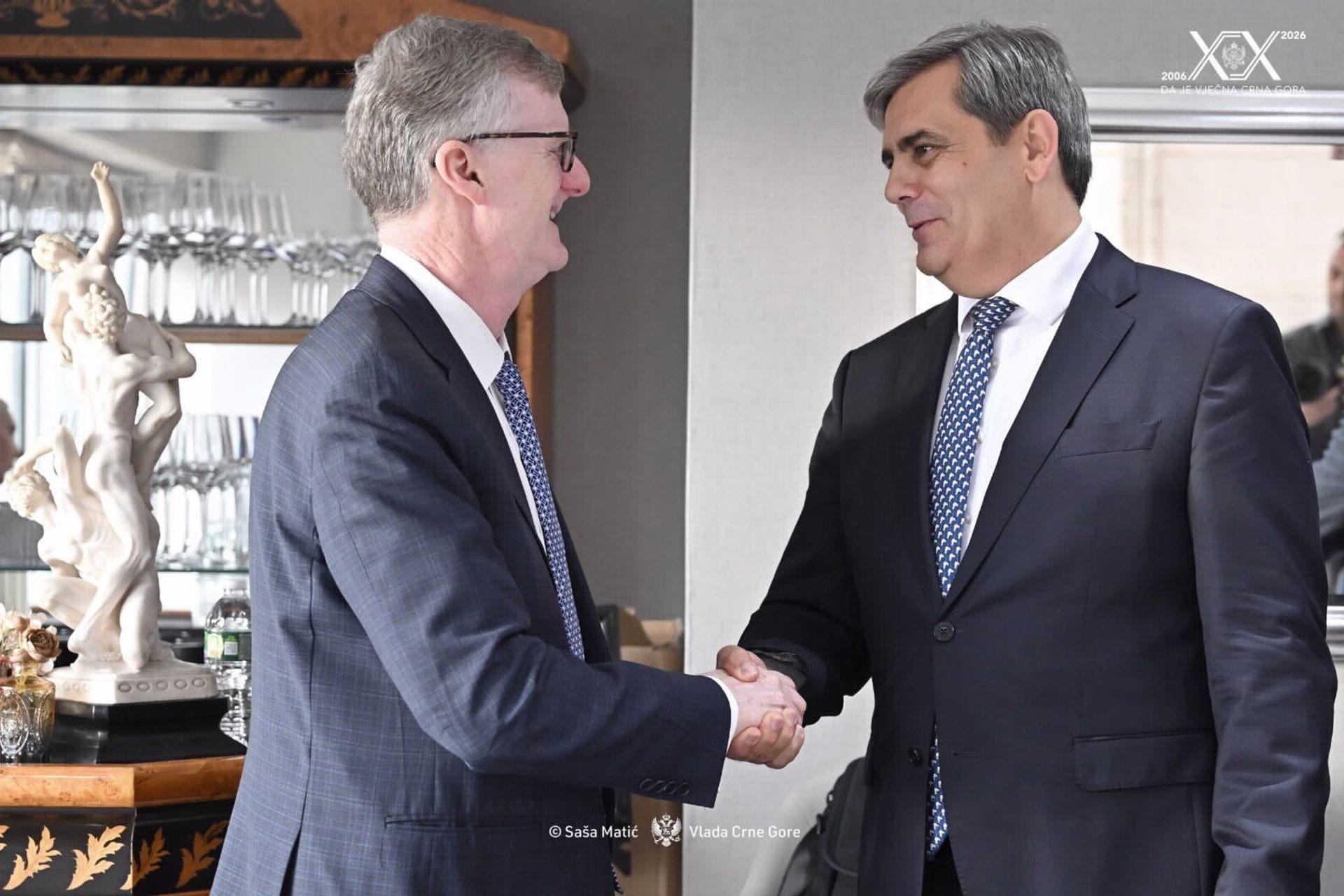
Speaking about Montenegro, Ibrahimović noted that, as the most advanced EU candidate country, Montenegro is exposed to malign influence by external actors, with such activities expected to intensify as the country moves closer to EU membership and the upcoming elections. He stressed that Montenegro remains committed to strengthening its resilience to hybrid and cyber threats, in cooperation with NATO, the European Union and its closest allies.
He also highlighted the strategic importance of the Adriatic-Ionian Corridor, which is expected to connect Montenegro’s transport, energy and digital infrastructure with neighbor countries and the wider Euro-Atlantic area.

He recalled that the project is part of the Government-to-Government (G2G) Agreement between Montenegro and the United States, while the electricity interconnection between Montenegro and Italy already directly connects the Western Balkans to the European energy market. Its further development will contribute to strengthening the regional energy network.
“For Montenegro, energy security is ultimately a matter of preserving freedom of choice. No country should find itself in a situation where dependence on energy, infrastructure or technology can be exploited to exert influence over its strategic decisions,” Ibrahimović said.
In conclusion, Ibrahimović stressed that diversified energy sources and secure critical infrastructure are essential to the security of the Western Balkans and the resilience of the Alliance, calling on A5 members, together with their allies and partners, to continue strengthening the region’s capacity to withstand external pressures and contribute to a stable and resilient Western Balkans, grounded in Euro-Atlantic values.