
- Home
Ibrahimović at Bled Strategic Forum: Geopolitics c...
Ibrahimović at Bled Strategic Forum: Geopolitics creates opportunity, reforms build credibility, and results should lead to membership

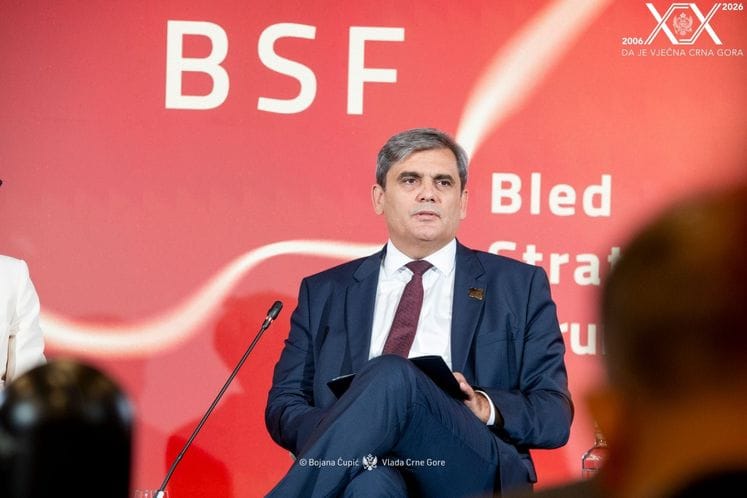
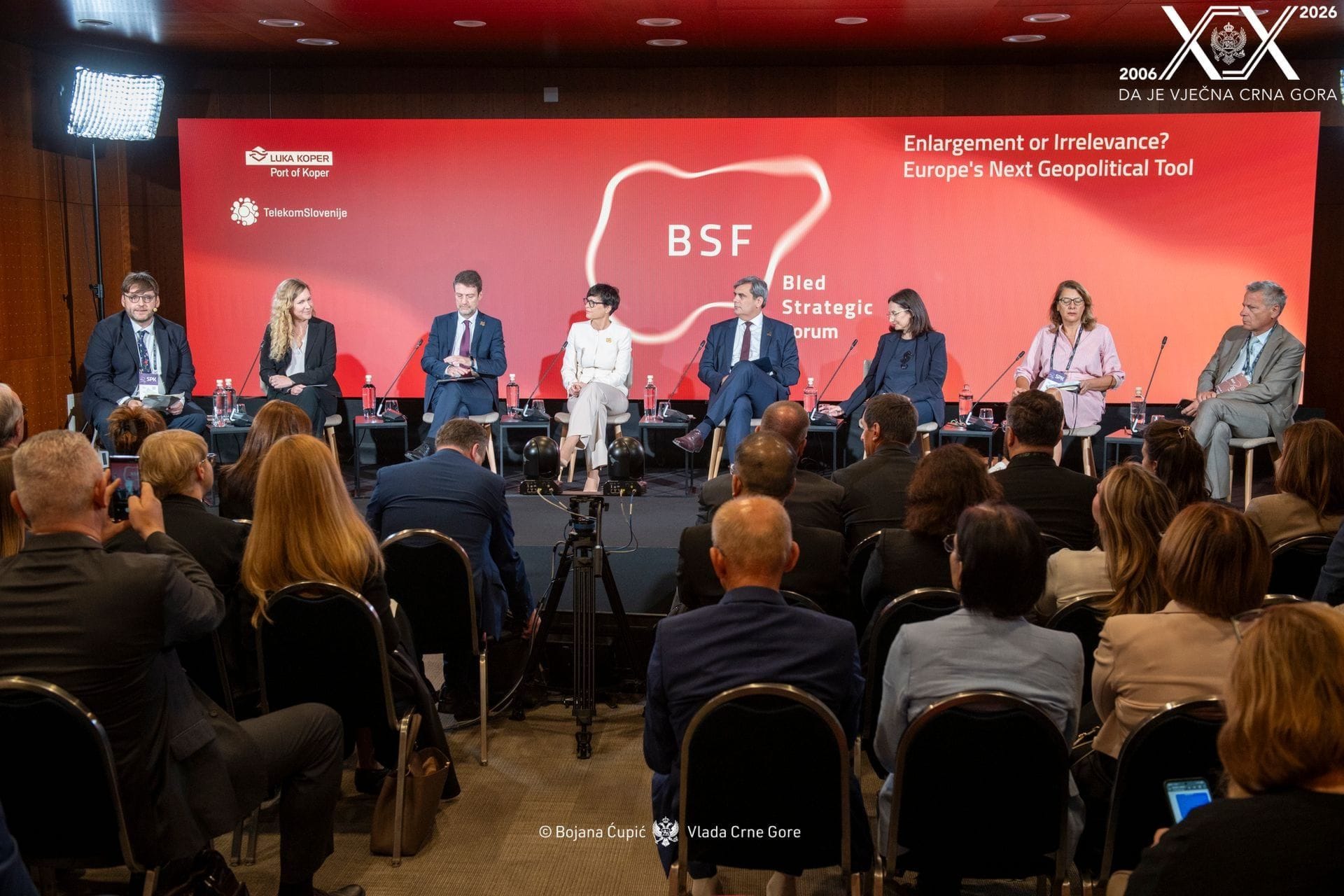
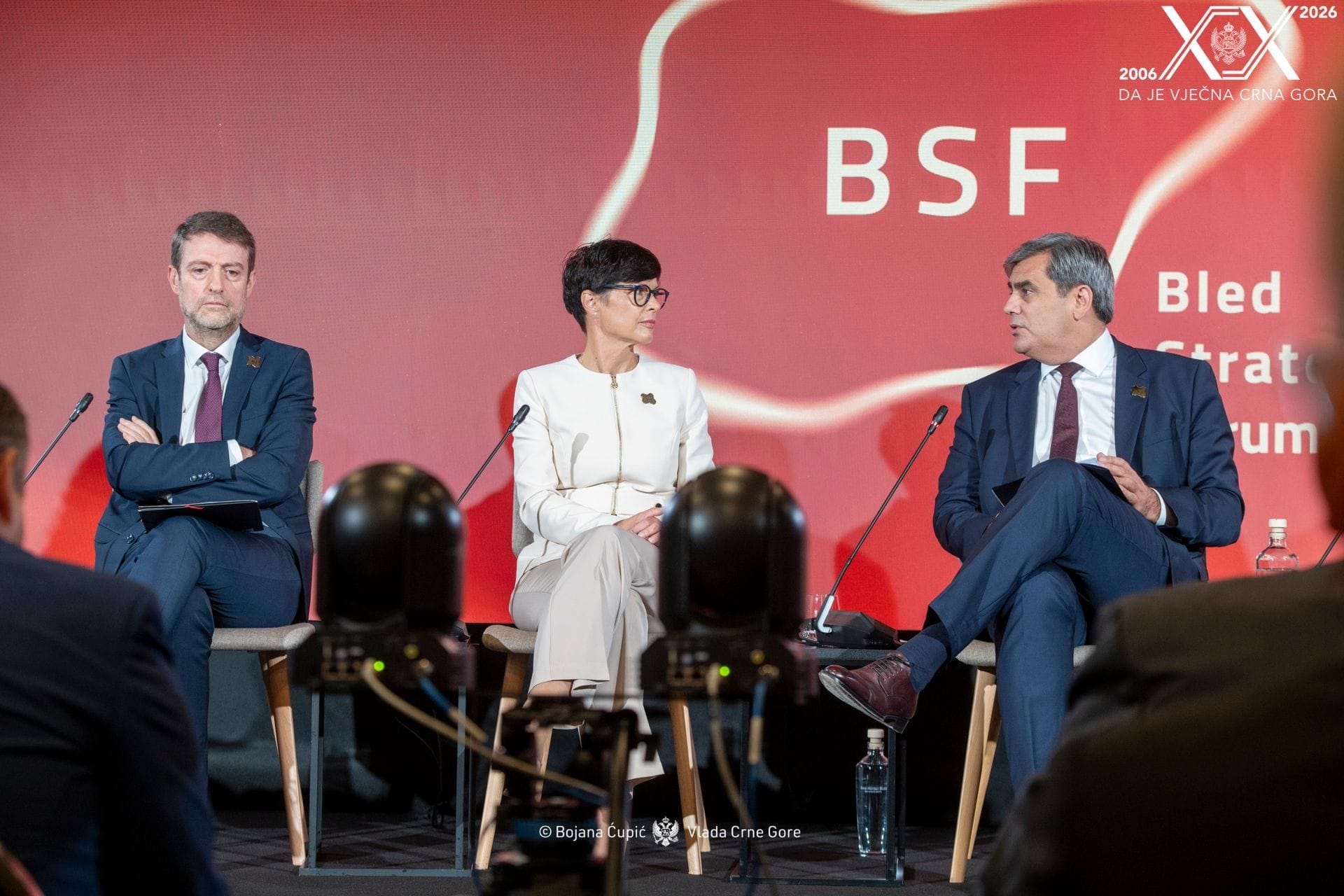
Deputy Prime Minister and Minister of Foreign Affairs Ervin Ibrahimović participated today in the panel “Enlargement or Irrelevance? Europe's Next Geopolitical Tool” as part of the 21st Bled Strategic Forum, which focused on the future of EU enlargement policy, the geopolitical role of the European Union and the European perspective of the Western Balkans.
Alongside Ibrahimović, the panel featured Marta Kos, European Commissioner for Enlargement; Ferit Hoxha, Minister for Europe and Foreign Affairs of Albania; Tamara Weingerl Požar, State Secretary for European and Political Affairs at the Ministry of Foreign and European Affairs of Slovenia; Vesko Garčević, Professor at the Frederick S. Pardee School of Global Studies at Boston University; Natalie Kauther, Director for the Western Balkans at the Federal Foreign Office of Germany; and Vessela Tcherneva, Deputy Director of the European Council on Foreign Relations. The panel was moderated by Adnan Ćerimagić, Senior Analyst for the Western Balkans at the European Stability Initiative.
Speaking about the impact of the changing geopolitical context on enlargement policy, Ibrahimović said that the war in Ukraine had changed the European debate and further confirmed that enlargement is not only a matter of the internal transformation of candidate countries, but also a strategic and geopolitical investment in Europe’s security, stability and resilience.
Geopolitics is important, but it is not enough to close chapters. Geopolitics has created a more favourable environment for enlargement, but it does not reform the judiciary, strengthen institutions or deliver results on the ground, Ibrahimović said.
He stressed that Montenegro had made significant progress precisely in these areas, recalling the reform processes launched following the Interim Benchmark Assessment Report (IBAR), including strengthening the rule of law, improving the judiciary and institutional efficiency, intensifying the fight against corruption and organised crime, and further strengthening democratic institutions.
Geopolitics creates opportunity. Reforms build credibility. Results should lead to membership, Ibrahimović said, stressing that EU membership is a strategic national goal for Montenegro that transcends the political mandates of individual governments.
In this context, he also pointed to the recently adopted constitutional amendments as an example of the importance of political consensus in implementing key reforms, alongside strong public support for Montenegro’s European future.
Asked whether Montenegro joining the EU on its own would disrupt the dynamics of the “Western Balkan Six”, Ibrahimović stressed that Montenegro’s progress would not mean leaving the region, but rather bringing it closer to the European Union.
Montenegro joining the EU would not mean leaving the Western Balkans. It would mean bringing the Western Balkans one step closer to the European Union, Ibrahimović said.
He stressed that Montenegro remains strongly committed to regional cooperation, good-neighbourly relations and the European perspective of the entire region, noting that Montenegro’s chairmanship of the Berlin Process will be used to further strengthen regional connectivity and cooperation.
We will do so as a candidate, and we will continue to do so as a future member of the European Union, Ibrahimović said.