
- Home
Spajić: I am confident Montenegro will complete EU...
Spajić: I am confident Montenegro will complete EU accession talks on time

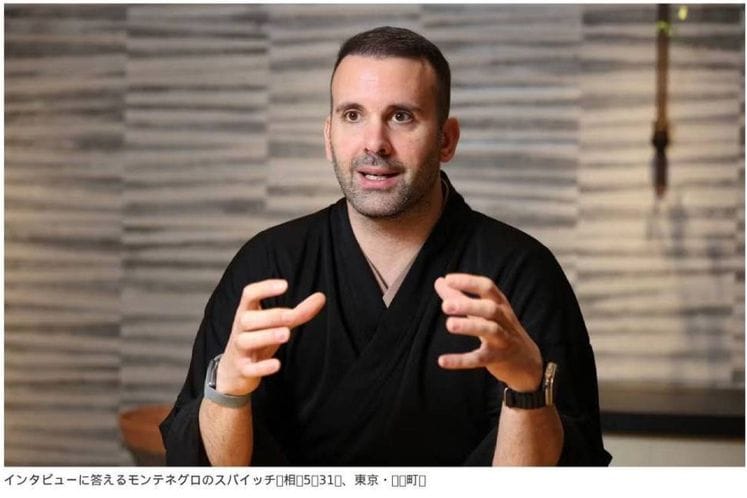
During his official visit to Japan, Prime Minister of Montenegro Milojko Spajić gave an exclusive interview to NIKKEI (Nihon Keizai Shimbun), Japan’s most influential economic daily and the parent company of the Financial Times. In the interview, Prime Minister Spajić discussed the achievements and future plans of the Government, as well as Montenegro’s position on key global issues.
Prime Minister Spajić emphasized that Montenegro’s primary objective is to complete its integration into the European Union within the shortest possible timeframe.
We aim to conclude EU accession negotiations by 2026 and become the 28th member state of the European Union by 2028. In just the last year and a half, we have made significant progress. While over 20 chapters remain open, I am confident we will complete the negotiations on time. The difference between a market of 500 million people, such as the EU, and our current market of around 500,000 is a thousandfold. That is why entering the EU single market is critical for Montenegro’s economy, the Prime Minister said.
The interview highlights that Montenegro’s unique ethnic composition gives it a special role in maintaining regional stability and promoting good neighborly relations in the Western Balkans. As such, Montenegro could serve as a bridge for further EU integration of the region.
Montenegro has no absolute ethnic majority—about 41% are Montenegrins, around 32% Serbs, followed by Bosniaks, Albanians, and others. If Montenegro joins the EU, it could become a true bridge to other countries in the Balkans, he said.
Prime Minister Spajić also expressed strong support for the cooperation between Japan and NATO, describing Japan, South Korea, Australia, and New Zealand as "partners with shared values" in the Indo-Pacific. He underscored that Montenegro fully supports Japan-NATO collaboration, calling Japan "Europe’s best friend."
In the context of global peace and security, Prime Minister Spajić pointed to the importance of the Japanese concept of “Ba” (場), rooted in the philosophy of Kitaro Nishida and the management theories of Ikujiro Nonaka. This concept emphasizes the value of interpersonal interaction and harmonious coexistence.
In Mediterranean countries, people can often be highly confrontational, but in Japan, I learned how everyone can contribute their perspective while preserving harmony and cooperation, said Spajić.
The article also notes that Prime Minister Spajić spent five years living in Japan. As a recipient of a Japanese Government scholarship, he spent a year studying at Osaka University before earning a degree in economics from Saitama University in 2012. He later obtained a Master’s degree from HEC Paris and is fluent in Japanese. The feature also recalls that on 28 May, Prime Minister Spajić held an official meeting with Japanese Prime Minister Shigeru Ishiba, conducted in Japanese.