
- Home
Successful organization of the EU–Western Balkans ...
Successful organization of the EU–Western Balkans Summit

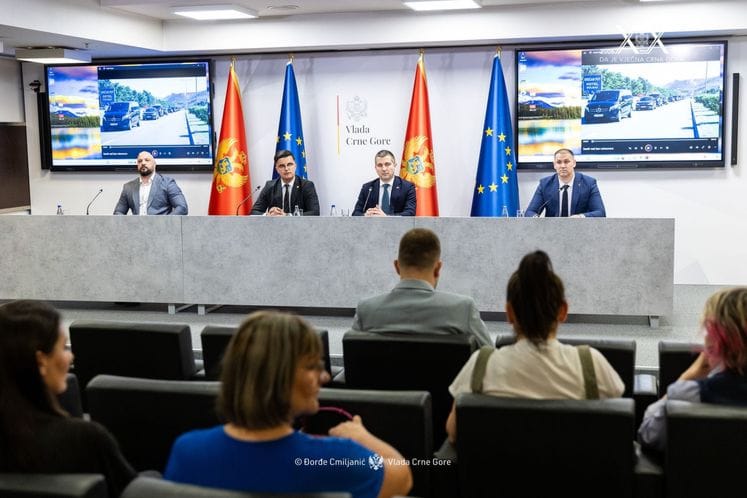
At a press conference held at the Government of Montenegro, security sector officials assessed that the successful organization of the EU–Western Balkans Leaders’ Summit in Tivat, along with the overall security environment in which it took place, confirmed Montenegro’s institutional maturity, professional capacity, and European perspective.
Deputy Prime Minister and Coordinator of the Bureau for Operational Coordination Aleksa Bečić said the country had successfully organized the largest international event in its recent history in a dignified and highly professional manner, expressing pride in both the state institutions and citizens who, as he noted, contributed to the successful outcome through patience, cooperation, and responsibility.
He emphasized that European leaders delivered three key messages: that Montenegro was an excellent host with flawless organization, that it had achieved significant reform results over the past period, and that the country is firmly progressing toward EU membership, with a realistic prospect of joining the Union in 2028.
Bečić also thanked all state institutions, security services, and thousands of personnel involved in the preparation and execution of the summit, noting that the intelligence and security sector formed the backbone of the entire operation. He said nearly 2,000 officers were engaged and that the operation ensured full security for 32 delegations and all participants, without a single security incident.
He underlined that extensive months-long preparations, risk assessments, and interagency coordination enabled a high level of safety, mobility, and control across all venues, allowing Montenegro to present itself as a reliable and responsible host country.
Referring to broader security reforms, Bečić said the state had significantly strengthened its institutional, operational, and personnel capacities, as well as international cooperation, which he described as being at a historic high. He added that these reforms have contributed to intensified pressure on organized crime groups, including major criminal clans, and that state institutions are now firmly positioned in opposition to criminal structures.
He further stated that ongoing reforms include modernization, digitalization, and significant investments in equipment and infrastructure, alongside comprehensive personnel reforms aimed at strengthening professionalism within the security sector.
These personnel reforms, he said, involve removing compromised individuals through legal mechanisms, improving working conditions and resources, and appointing qualified professionals to leadership positions within law enforcement institutions, granting them full operational independence.
Bečić also highlighted plans to further strengthen the system through recruitment, including the ongoing public call for 500 new police officers, as well as enhanced training capacities at the Police Academy in Danilovgrad. He described the security sector as the backbone of the state, emphasizing that a strong and resilient security system is essential for Montenegro’s stability and long-term development.
Minister of Interior Danilo Šaranović announced the recruitment process for new police officers, noting that applicants aged 18 to 32 with appropriate educational qualifications are eligible. He said the initiative is part of efforts to address a long-standing personnel shortage and strengthen border security and crime prevention capacities, particularly in line with EU accession obligations.
Director of the Police Directorate Lazar Šćepanović stated that the security operation for the summit was one of the most complex in Montenegro’s recent history. He explained that preparations lasted nearly six months and included detailed risk analysis, interinstitutional coordination, and the deployment of advanced security resources across land, air, and sea.
He added that approximately 1,000 participants, including 32 high-level protected individuals, were secured without any incidents, highlighting an unprecedented level of coordination among state institutions.
In conclusion, officials agreed that the successful organization of the summit and ongoing reforms demonstrate that Montenegro possesses the institutional strength, professional capacity, and clear strategic direction necessary for continued development as a stable and European-oriented state.
