
- Home
The 26th EU-Montenegro Intergovernmental Conferenc...
The 26th EU-Montenegro Intergovernmental Conference – Chapter 21: Trans-European Networks provisionally closed
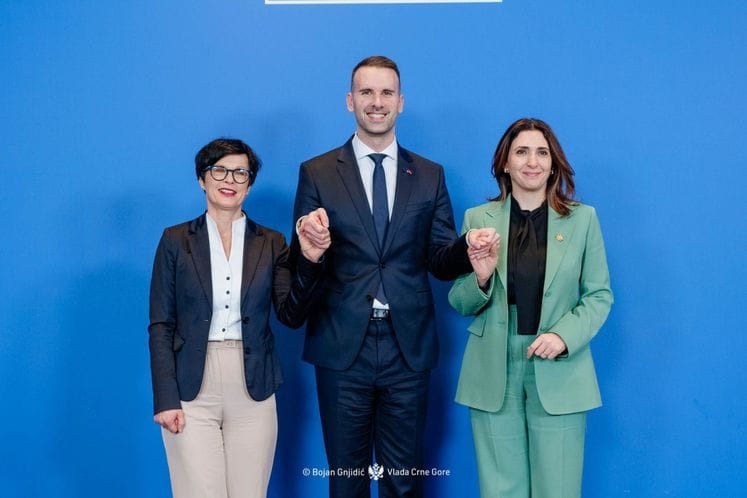
At the EU-Montenegro Intergovernmental Conference, held today in Brussels, Chapter 21 – Trans-European Networks was provisionally closed, marking the 14th chapter closed in the accession process and the 11th since Montenegro received a positive IBAR for chapters related to the rule of law.
The Government delegation at the Intergovernmental Conference was led by Prime Minister Milojko Spajić, who emphasized that trans-European networks enable stronger connections between people, economies, opportunities, and ideas.
Our continent is becoming increasingly interconnected and united. In this regard, today’s step goes beyond networks themselves. It is about Montenegro and its citizens becoming more firmly woven into the fabric of the European Union, Prime Minister Spajić stated in his address to the Conference participants.
He underlined that, for Montenegro – situated at a strategic crossroads between the Adriatic and the Western Balkans – the advancement and development of trans-European transport and energy networks represent a strategic objective within the broader European system of mobility, logistics, and economic integration.
This means that every major infrastructure decision we make is guided by a broader perspective: how Montenegro connects with its neighbours, how the Western Balkans connects with the European Union, and how these links contribute to a more integrated European continent – a goal whose relevance is greater today than ever before, the Prime Minister noted.
He further stated that Montenegro has actively participated in identifying priority infrastructure corridors and strengthening regional coordination, while continuing to expand electricity interconnections with neighbouring countries and the European Union.
The submarine electricity cable linking Montenegro and Italy already represents a strong bridge between the Western Balkans and the European energy market, enhancing regional stability, integration, and security of supply. At the same time, Montenegro participates in regional initiatives aimed at strengthening diversification and connectivity of energy systems, including projects such as the Ionian-Adriatic Pipeline, Prime Minister Spajić said.
He emphasized that the long-term future of Montenegro’s energy system lies in renewable energy sources, modern electricity infrastructure, and low-carbon solutions.
The Prime Minister expressed gratitude to the European Commission, the presiding country Cyprus, and EU Member States for their constructive engagement and continued support in the integration process.
He concluded that Montenegro will continue to strengthen its administrative capacities, carefully plan infrastructure investments, and ensure full compliance with European standards and rules.
Every modernised kilometre of railway, every connected port, every strengthened energy interconnection brings Montenegro and the European Union closer together. The most tangible essence of European integration lies in building connections that shorten distances, facilitate cooperation, and strengthen our shared future. Today, by provisionally closing Chapter 21, we have built another important trans-European link, Prime Minister Spajić concluded.
