
- Home
Montenegro: Leadership with a Vision
Montenegro: Leadership with a Vision

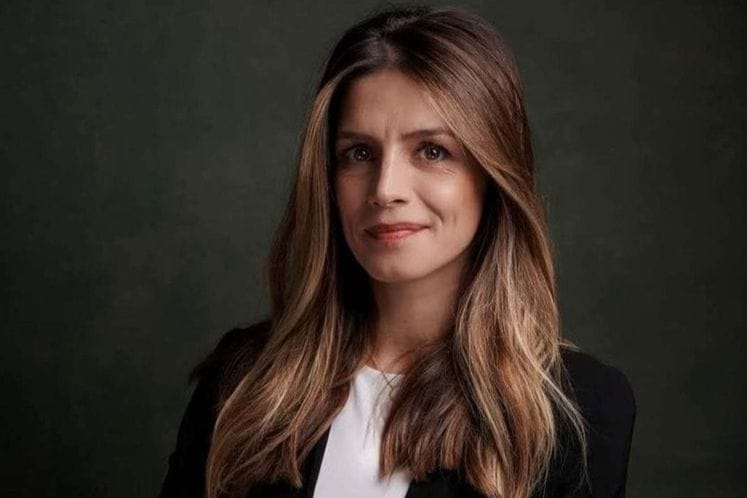
Written by: Milica Perišić, Foreign Policy Advisor to the Prime Minister of Montenegro and National Coordinator for the Berlin Process
Twenty years ago, Montenegro restored its independence; thirteen years ago, we embarked—irrevocably for us—on the path toward the European Union. Without the slightest deviation, consistently following the values and principles of the Union. The “European child,” as Montenegro is often referred to in numerous independent analyses, now stands at the threshold of membership with a clear ambition—to complete the negotiation process by the end of 2026 and become a full member in 2028.
For us, this is not merely a foreign-policy issue, but a broader societal one. It represents the European legitimation of our civic identity. The crown of what we have achieved by transforming into a successful democracy in which—since the 2006 referendum on the restoration of independence, NATO membership in 2017, and up to the peaceful transition of power in 2020—decisions have been made in an environment of full freedom of choice for every individual.
Therefore, this year is one of the most important in our recent political history. The final ascent of a triathlon.
And this is not a direction we have chosen only for ourselves, but a path we have paved for the entire region. From responding to the European Commission Questionnaire; to the first—and so far only—IBAR granted to a candidate country; to 40% of negotiation chapters provisionally closed.
The year in which we mark 20 years since the restoration of independence is also the year in which we have been entrusted with the honor and responsibility of chairing the Berlin Process. It is likewise the year in which we host the EU–Western Balkans Summit, assume the chairmanship of the Western Balkans Fund, and the Committee of Ministers of the Council of Europe. All of these circumstances make 2026 a period of intensive, substantive, and strategically oriented foreign policy for Montenegro.
In this context, I would like to draw particular attention to Montenegro’s chairmanship of the Berlin Process, which is based on clearly defined strategic priorities reflecting both the long-term objectives of the process and the urgent needs of the region on its path toward European Union membership.
As Chair, our goal is to strengthen regional cooperation, promote sustainable development, and ensure concrete and measurable benefits for the citizens of the Western Balkans. This will be achieved through four priorities of our chairmanship: Strong and inclusive economic growth, based on deeper regional market integration and genuine convergence with the European Union; Competitiveness, through support for innovation, digital transformation, and the development of human capital; Security and resilience, through cooperation in the fields of internal and external security, strengthening institutional capacities, border management, and combating organized crime and illicit financial flows; and Green and sustainable transition, through alignment of policies with the European Green Deal, implementation of the Green Agenda for the Western Balkans, and investment in renewable energy sources, energy efficiency, and climate resilience.
In addition to implementing the defined priorities, one of the key legacies of Montenegro’s chairmanship will be a reflection on the future of the Berlin Process itself. At a moment when the region stands at a crossroads of European integration, Montenegro will, through inclusive dialogue, commit to reaching new agreements that will chart the course for the further development of this initiative.
For this reason, the final document of our chairmanship will include recommendations aimed at strengthening the political relevance of the Berlin Process, better aligning it with the European Union’s enlargement policy, and orienting it more strongly toward measurable results.
An ambitious calendar of activities will include ministerial meetings at the level of: public administration, agriculture, creative industries, internal affairs, economy, energy, youth, and foreign affairs; a Business Forum; and a Forum of Heads of Border Police, culminating in the Leaders’ Summit in October.
Special emphasis will be placed on inclusive forums that strengthen the democratic dimension of the Berlin Process: Roma inclusion, the Youth Forum, the Civil Society and Think Tank Forum, the Gender Equality Forum, as well as the Media Forum—thus ensuring broader societal participation and a stronger link between policies and the real needs of citizens.
The motto of our chairmanship—“A Region in Motion. Owners of Change.”—clearly reflects this vision. The region symbolizes unity and shared responsibility; motion denotes momentum and tangible progress; ownership confirms the region’s readiness to assume responsibility; while change reflects our ambition to deliver real, visible, and lasting results for citizens.
We approach the chairmanship of the Berlin Process with confidence, a strong sense of responsibility, and readiness to deliver results.
Through leadership with a vision, Montenegro is reforming itself and leading through action, dialogue, partnership, and concrete initiatives that pave the way toward a shared European future for the Western Balkans.