

- Home
Press release from the 127th Cabinet session
Press release from the 127th Cabinet session

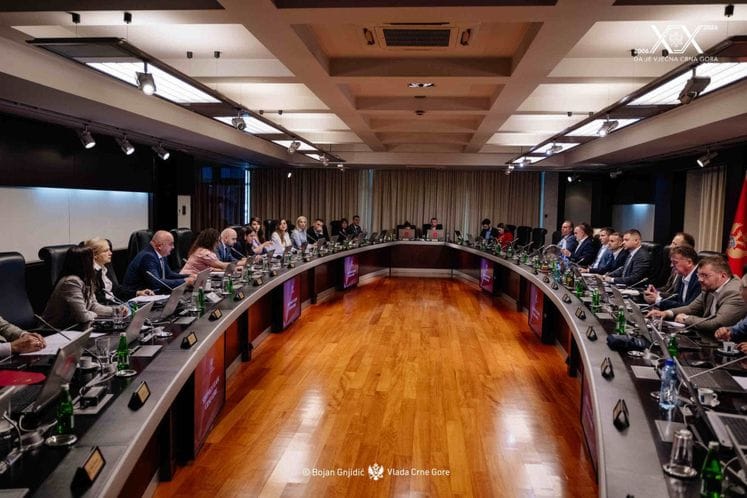
At its 127th session held earlier today, chaired by Prime Minister Milojko Spajić, the Montenegrin Cabinet established the Draft Law Amending the Law on Environmental Liability. The draft law regulates the method and procedure for determining liability for environmental damage, as well as the application of preventive and remedial measures aimed at preventing and eliminating environmental damage. The proposed law ensures full harmonisation of national legislation with Directive 2004/35/EC of the European Parliament and of the Council of 21 April 2004 on environmental liability with regard to the prevention and remedying of environmental damage, including its amendments, thereby fulfilling obligations arising from the European Union accession process, particularly within Chapter 27 – Environment and Climate Change. The objective of the EU Directive governing this area is to remedy environmental damage “in kind,” meaning to restore the environment to its original condition or compensate for damaged natural resources, rather than providing monetary compensation. Therefore, this law establishes liability for environmental damage as a special category of liability, distinct from civil liability.
The Government also adopted the Decree on the Types of Activities and Installations Requiring an Integrated Permit. The EU Industrial Emissions Directive was amended in 2025 and Montenegro is obliged to transpose the relevant provisions into its legal system. The decree prescribes criteria and capacities for identifying installations subject to the obligation of obtaining an integrated operating permit, with the aim of achieving a high level of environmental protection in the following sectors: energy (fuel combustion in installations with a total rated thermal input of 50 MW or more, refining of mineral oil and gas, coke production, gasification or liquefaction); metal production and processing; the mineral industry; the chemical industry; waste management; and other activities (slaughterhouses, treatment and processing of certain food products and milk, poultry or pig fattening facilities, etc.).
The meeting also adopted the Roadmap for the Implementation of Directive 2009/43/EC and the Commission Delegated Directive (EU) 2025/290. These European regulations introduced a multi-level system of transfer licenses — general, global and individual — applicable to transfers of defense-related products between Member States. Therefore, the obligations of Member States are defined regarding the publication of general transfer licenses, the issuance of global transfer licenses to individual suppliers, the certification of recipients and the exchange of information between competent state authorities. Given that the Directive applies exclusively to the EU Member States, Montenegro is using this Roadmap to define the steps necessary to ensure full readiness for its effective implementation from the date of accession.
The Cabinet adopted the Information on Support for Agricultural Producers Regarding the Excise Portion of Fuel Costs. During the discussion on this topic, it was emphasised that high fuel costs significantly increase overall production expenses, thereby reducing the profitability of agricultural production. In this context, it was noted that cheaper fuel for agricultural producers — specifically fuel priced lower by the amount of the excise duty — can help maintain the competitiveness of domestic agricultural production and ensure a stable food supply. In accordance with the latest amendments to the Excise Law, the Ministry of Agriculture, Forestry and Water Management determined fuel quantities for registered agricultural holdings based on the total area of cultivated agricultural land per hectare, specifically: 110 liters per hectare annually for crop farming, 70 liters per hectare annually for fruit growing, viticulture, and olive cultivation, and 40 liters per hectare annually for meadows. For the implementation of this support measure, based on data on subsidized areas in 2025 totaling 45,185.34 hectares, it is necessary to allocate €1,078,133.19.