
- Home
Press release from the 132th Cabinet session
Press release from the 132th Cabinet session

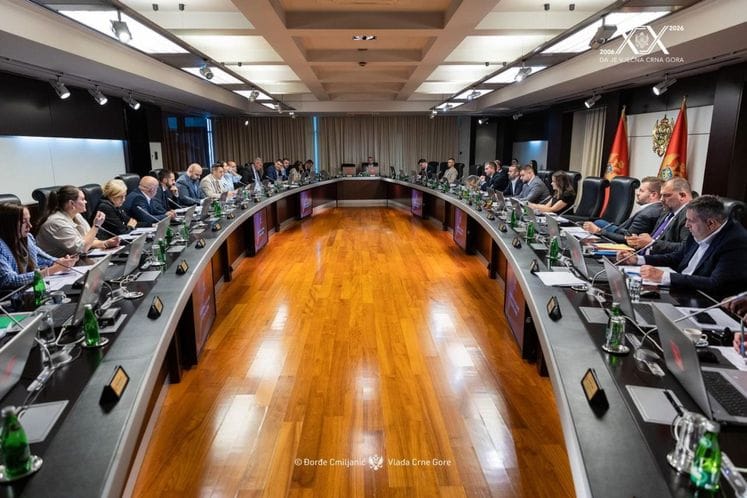
At its 132nd session held today, chaired by Prime Minister Milojko Spajić, the Montenegrin Cabinet adopted the Draft Law on the Protection of Whistleblowers, which regulates the reporting of irregularities, the rights and protection of whistleblowers, and the obligations of competent institutions and other entities in relation to whistleblower reports. The purpose of the Law is to establish an efficient, secure, and reliable system for reporting irregularities while safeguarding the identity and rights of whistleblowers. It is expected to encourage the reporting of misconduct in both the public and private sectors, strengthen transparency, accountability and the fight against corruption, and enhance public trust in institutions. The law also further aligns Montenegro’s legal framework with Directive (EU) 2019/1937 of the European Parliament and of the Council of 23 October 2019 on the protection of persons who report breaches of the Union law. The adoption of this law is envisaged under Montenegro’s 2026 EU Accession Programme and constitutes one of the obligations under the Action Plan for Chapter 23.
The Government also adopted the Draft Law Amending the Law on the Prevention of Corruption, further strengthening Montenegro’s legal framework for preventing and combating corruption. The proposed amendments provide a higher level of alignment with the European Union and Council of Europe's standards while reinforcing preventive anti-corruption mechanisms. The law will improve the work of the Agency for the Prevention of Corruption, address shortcomings identified in the implementation of the existing legislation, and further strengthen the legal and institutional framework for more effective implementation of anti-corruption policies. Its adoption fulfills Montenegro’s obligations under Chapter 23 – Judiciary and Fundamental Rights.
The Government adopted the Draft Law on Commodity Reserves, establishing, for the first time, a comprehensive legal framework governing the planning, establishment, management, storage, renewal and use of state commodity reserves in Montenegro. The law aims to establish an effective system of commodity reserves to enable timely responses to market disruptions, natural disasters, emergencies, epidemics, and other crises, thereby ensuring an uninterrupted supply of essential food products and other strategically important goods. The proposed legislation provides for the establishment of reserves of food, medicines, medical supplies, rescue and protection equipment, and other strategic raw materials, together with appropriate storage capacities and three-year programmes defining the types, quantities, and management of commodity reserves. During the discussion, it was emphasized that the adoption of this law is particularly important given Montenegro’s significant dependence on imports. Establishing a functional commodity reserve system will strengthen food and national security, improve the country’s resilience to crises, and ensure a more secure and stable supply of essential goods during emergencies.
The Government adopted the Draft Law on Mining, together with the report on the public consultation, regulating the conditions and methods for the exploitation of mineral resources, the execution of mining operations, and the preparation and implementation of mining projects. The new law also regulates the construction and operation of mining facilities and installations, land rehabilitation and reclamation, environmental protection measures, occupational health and safety and other issues relevant to the mining sector. The need for a new law stems primarily from the obligation to harmonise national legislation with European Union law, as well as from the need to further improve the regulatory framework governing mining, ensure more efficient management of mineral resources as natural assets of general public interest owned by the State, strengthen oversight of mineral resource exploitation, enhance environmental protection and create conditions for the sustainable and responsible use of Montenegro’s mineral resources. The draft law introduces, for the first time, an obligation for the Government to adopt a Critical Mineral Resources Exploitation Plan, ensuring a strategic and planned approach to the management and use of critical mineral resources in line with the country’s strategic interests.
As part of the continued alignment of national legislation with the European Union acquis, the Cabinet adopted a package of tax laws:
- Draft Law Amending the Corporate Income Tax Law
The law introduces rules aimed at preventing tax avoidance, including measures to prevent tax base erosion and profit shifting to jurisdictions with more favourable tax regimes, prevent hybrid mismatches, and curb the abuse of tax arrangements. It establishes mechanisms to combat aggressive tax planning, thereby strengthening fiscal stability, enhancing the fairness of the tax system, ensuring equal treatment of taxpayers and improving the investment climate. It also upgrades existing provisions concerning tax incentives for reinvestment, particularly investments in agriculture.
- Draft Excise Duty Law
The proposed law provides more precise definitions of tax liabilities, exemptions, and excise duty refunds, thereby simplifying administrative procedures for taxpayers and competent authorities. It further strengthens the legal framework for combating the shadow economy in the trade of excise goods by enhancing control mechanisms, improving systems for recording and monitoring the movement of goods, clearly defining the obligations of all participants in the excise goods supply chain and introducing modern electronic monitoring tools. These measures are expected to reduce tax evasion, smuggling and other illegal activities while strengthening fiscal discipline, increasing budget revenues and ensuring fair market conditions.
- Draft Law on Tax Exemptions for Certain Means of Transport Temporarily Imported from One Member State into Another, with the report on the public consultation
The most significant innovations include the introduction of a unified and comprehensive regime governing temporary imports, with clearly defined conditions and time limits for tax exemptions aligned with European standards. The law also introduces mandatory electronic registration and deregistration of the temporary stay of vehicles, as well as a centralised Register of Foreign Vehicles enabling automated monitoring, data exchange and notification of competent authorities in cases of overstayed vehicles or other irregularities.
- Draft Law Implementing Regulation (EU) No. 904/2010 on Administrative Cooperation and Combating Fraud in the Field of Value Added Tax
The law comprehensively regulates, for the first time, the application of European Union rules on administrative cooperation and anti-fraud measures in the area of VAT within Montenegro’s legal system. It establishes a Central Liaison Office as a dedicated organisational unit responsible for communication with EU Member States, defines procedures for the electronic exchange of information and introduces obligations for maintaining and regularly verifying the accuracy of data used in international cooperation. The law also introduces more precise mechanisms for verifying VAT identification numbers, conducting joint and simultaneous tax audits with EU Member States, obliging taxpayers to submit certain records electronically upon request and imposing sanctions for non-compliance.
- Draft Law Amending the Tax Administration Law
The proposed amendments address existing shortcomings and create the necessary legal basis for the automatic exchange of information concerning advance cross-border tax rulings, advance pricing agreements, cross-border arrangements, and top-up tax.
- Draft Law on Value Added Tax, with the report on the public consultation
The draft law aims to establish a new, comprehensive VAT system fully aligned with the European Union acquis. It simplifies cross-border transactions and removes the requirement to pay VAT upon importation, thereby improving business liquidity. The law is expected to reduce administrative barriers and enhance the competitiveness of Montenegrin companies in the EU market.
- Draft Law on Tax Dispute Resolution Mechanisms in the European Union
This law introduces rules governing the resolution of tax disputes between Montenegro and European Union Member States arising from the interpretation and application of agreements designed to eliminate double taxation of income and capital, while also defining the rights and obligations of taxpayers involved in such disputes. The law establishes an efficient and effective framework for resolving tax disputes, thereby strengthening legal certainty, improving the business environment and contributing to a fairer tax system.
The Government adopted amendments to the Draft Law on the Government of Montenegro, implementing the recommendations of the Venice Commission contained in its Follow-up Opinion adopted at its 147th Plenary Session held on 12–13 June 2026. The amendments clarify that the Government, the Prime Minister, Deputy Prime Ministers, and Ministers are accountable to Parliament. They also require the Ethics Committee to submit its annual report to Parliament for approval, thereby ensuring parliamentary oversight of its work.
Today's session also adopted the Decision on the Preparation of the Spatial Plan for the Special Purpose Area of Biogradska Gora National Park, establishing guidelines for the protection, development and sustainable use of this protected area. The new plan aims to align with the current legal framework, improve the system for the protection and management of the Park, develop visitor infrastructure, preserve its rich biodiversity and natural values and promote sustainable tourism and traditional agriculture. The plan ensures a balanced approach between nature conservation and sustainable development while creating better conditions for scientific research, education and tourism, thereby safeguarding Biogradska Gora National Park as one of Montenegro’s most valuable natural assets.
The Government adopted the Information on the conclusion of a Loan Agreement with the European Bank for Reconstruction and Development (EBRD) to finance the Intelligent Transport Systems (ITS) Implementation Project on Montenegro’s road network, in an amount of up to EUR 30 million, and approved the Loan Agreement. It was noted during the discussion that the loan amounts to EUR 30 million, with a repayment period of 15 years, including a three-year grace period, and a variable interest rate consisting of the six-month EURIBOR plus a 1% margin. The funds will be invested in the development and deployment of modern intelligent transport systems, improving traffic management, increasing road safety, and enabling more efficient use of road infrastructure. The implementation of this project represents one of the Government’s strategic priorities and forms part of the European Union’s Economic and Investment Plan for the Western Balkans, aimed at improving Montenegro’s transport connectivity with the region and the European Union.
The Government also adopted the 49th Quarterly Report on the Overall Activities within Montenegro’s European Union Integration Process for the period January–March 2026. The Ministry of European Affairs was tasked with submitting the report to the Parliament’s Committee on European Integration in order to ensure regular and comprehensive reporting on Montenegro’s EU accession negotiations and facilitate the exchange of views on current issues and challenges in the negotiation process.
