
- Home
Ministry of European Affairs Second meeting of the Reform and Growth Instrument...
Second meeting of the Reform and Growth Instrument Supervisory Board held

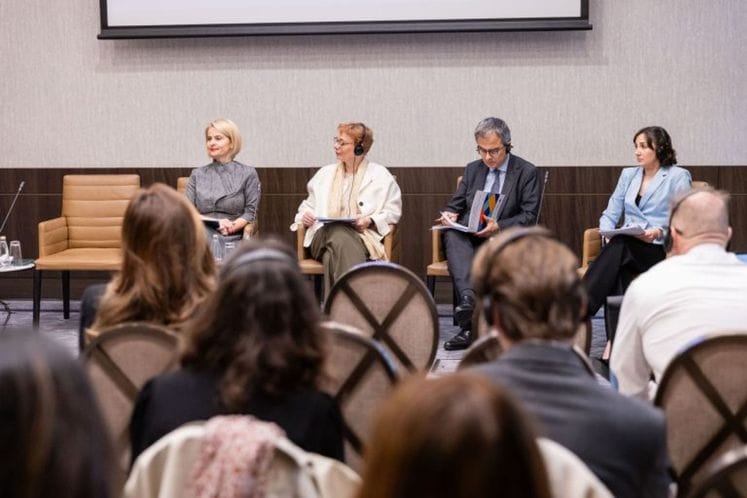
The second meeting of the Supervisory Board of the Reform and Growth Instrument brought together representatives of the Government of Montenegro, the European Commission, international partners, and civil society, with the aim of reviewing the progress achieved so far in implementing the Reform Agenda.
State Secretary at the Ministry of European Affairs, Bojana Bošković, said that the Reform Agenda represents an additional incentive for carrying out substantive reforms that directly contribute to improving governance, strengthening institutions, and enhancing the quality of life of citizens.
“I would like to emphasize the Government’s full commitment to fulfilling all defined reform steps and indicators. Our goal is clear: successful and consistent implementation of the Reform Agenda, with the possibility, based on the results achieved during this year, to create the conditions for increasing both the scope of reforms and the amount of funds that Montenegro can utilize,” Bošković said.
She recalled that Montenegro has so far submitted three semi-annual and two annual reports on the implementation of the Reform Agenda.

“The funds that, based on the third report, we believe will soon be officially approved are the result of concrete reform steps across several policy areas—from faster administrative procedures in removing new business barriers, improving cadastre management, increasing energy efficiency, including building renovations and modernization of public lighting, to strengthening the protection of human rights, reducing the number of complaints to the Ombudsman, and decreasing incidents reported by LGBTIQ civil society organizations,” Bošković pointed out.
Deputy Head of the Montenegro Unit at DG ENEST, Heinke Veit, praised Montenegro’s continuous efforts in implementing the Reform Agenda. However, she stressed that, as a leader in the EU accession process, expectations for Montenegro remain high. In the coming period, Montenegro needs to continue fulfilling the necessary steps in order to make use of available funds and prepare for the challenges that EU membership brings. The model of cooperation between the Ministry of European Affairs, the EU Delegation, and the European Commission serves as an example for other beneficiary countries receiving support through the Growth Plan for the Western Balkans.
Director General at the Ministry of Finance, Velibor Damjanović, pointed to the role of that ministry in implementing the Reform Agenda.
“Relying on experience from previous processes of managing EU funds, the Ministry of Finance has also, within the Reform Agenda, played a key role in establishing and strengthening quality control, verification mechanisms, the institutional framework, and inter-institutional communication as the foundation for responsible and credible implementation of reforms,” Damjanović said.
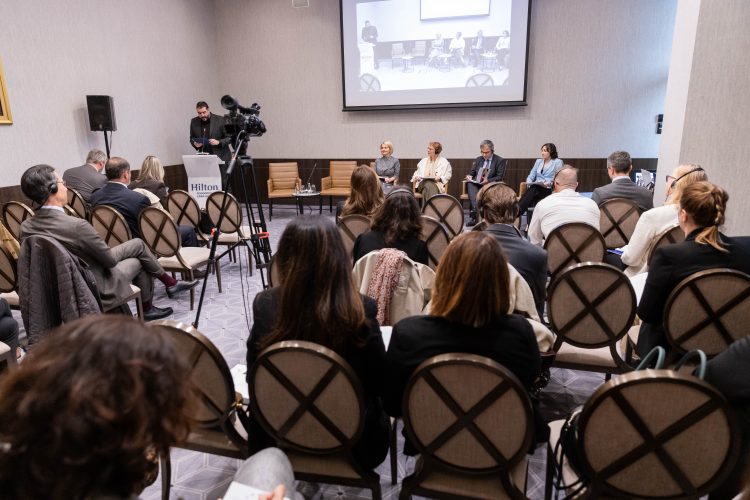
Members of the Supervisory Board noted that Montenegro has successfully completed the first three reporting cycles and emphasized that the adopted Regulation on the method of implementing EU support through the Reform and Growth Instrument will further strengthen governance and accelerate the implementation of 130 planned reform steps.
They also stressed the need for stronger engagement by all competent institutions in order to speed up the implementation of obligations and ensure efficient use of the available funds from the Reform and Growth Instrument. It was concluded that the focus in the coming period will be on the timely fulfillment of obligations due in June and December 2026, as well as on reducing the risk of losing funds through better coordination and improved monitoring of reform implementation.