
- Home
Press release from the 105th Cabinet session
Press release from the 105th Cabinet session

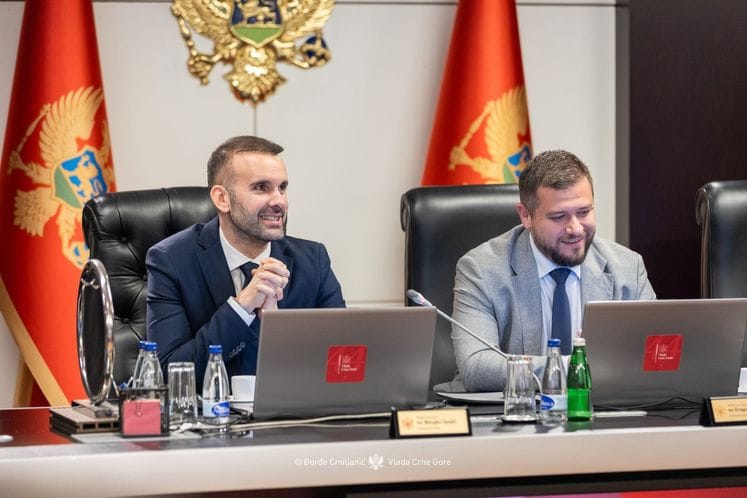
The Montenegrin Cabinet held its 105th session, chaired by Prime Minister Milojko Spajić. The Cabinet adopted the Information on the unpaid extension of the project “Together for the Common Good – Enhancing Citizens’ Trust in Institutions and Building Resilient Communities,” along with the proposed accompanying document. As highlighted during the session, the project is implemented by UNDP, UNICEF, and UNESCO, in cooperation with the Government of Montenegro and with the support of the UN Peacebuilding Fund (PBF). The project, launched in January 2024 and initially planned to be completed in December 2025, has been extended until July 2026. This six-month extension, approved by the PBF in order to ensure sustainability and institutionalization of the project’s results, will be formalized through an updated project document, to be signed by the Prime Minister and the heads of UNDP, UNICEF, and UNESCO. In addition to the Government, key partners in the project include local self-governments, multisectoral councils, the Parliament, the Ombudsman, civil society organizations, schools, universities, the media, and cultural institutions. The project promotes social cohesion by empowering communities to engage in dialogue and joint initiatives that contribute to the common good, strengthen trust in institutions, and prevent harmful narratives and violence. It also aims to strengthen institutions by supporting them to respond to the outcomes of inclusive dialogues that reflect community needs. At the same time, the project seeks to help institutions adopt and implement these recommendations and create inclusive, gender-responsive, rights-based policies and actions that enhance social cohesion at both the local and national level.
The Cabinet adopted the Draft Law on Amendments to the Law on Insurance. The proposed amendments will generate numerous positive effects on the overall insurance system in Montenegro by strengthening the institutional framework, improving corporate governance, and increasing the level of protection for policyholders and investors. The introduction of a two-tier management system in insurance companies will create conditions for greater accountability and more effective oversight of executive bodies, contributing to better decision-making and more transparent operations. Such a structure ensures stronger protection of the interests of policyholders and shareholders, while also increasing trust in the insurance market as a whole. On the insurance market, these amendments will contribute to greater stability and resilience of the financial system through full alignment with relevant European Union directives, particularly the Solvency II Directive and the Insurance Distribution Directive. In this way, Montenegro further aligns itself with European standards of operation and supervision of insurance companies, strengthening investor and consumer confidence and fostering the development of a competitive and sustainable market. Ultimately, the proposed amendments promote the development of a stable, transparent, and competitive insurance sector in Montenegro, fully harmonized with European standards, ensuring a higher level of protection for all participants and contributing to the overall strengthening of the country’s financial system.
The Cabinet adopted the Report on the Work of the Commission for the Analysis and Monitoring of Service Contracts and Temporary and Occasional Work Contracts in budget-funded units for the period June–October 2025. From the adoption of the First Report in June until October 2025, the Commission held 12 sessions and reviewed 185 requests from budget users. Approval was granted for 163 requests, 13 were rejected, and 9 were partially approved. Based on data submitted by budget-funded units and in accordance with the Commission’s established criteria, the number of service contracts decreased from 1,885 in December 2024 to 1,610 as of 15 October 2025 – a reduction of 275 contracts, or 14.58%. The number of temporary and occasional work contracts decreased from 63 to 18, representing a reduction of 71.42%.
