
- Home
Press release from the 131st Cabinet session
Press release from the 131st Cabinet session

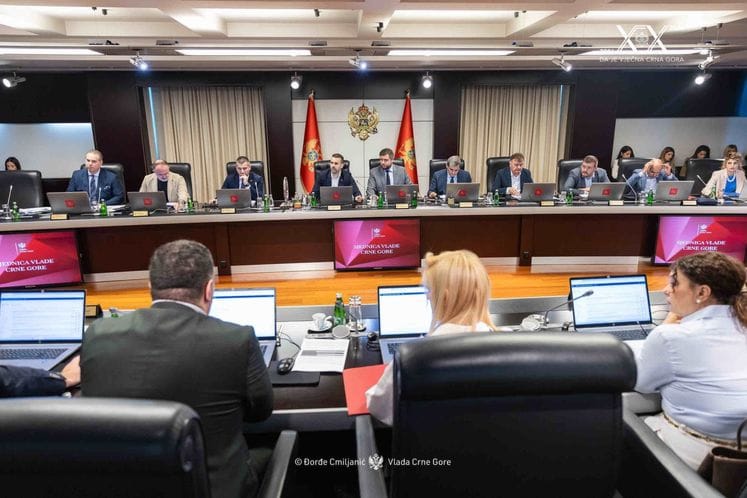
The Montenegrin Cabinet held its 131st session, chaired by Prime Minister Milojko Spajić. The Cabinet adopted the Draft Law on Tourism and Hospitality, together with the Report on the Public Consultation. The proposed legislation introduces several new guiding principles that will serve as the foundation for further development and enhancement of tourism and hospitality services, including:
- preserving the quality of life of local communities and safeguarding intangible cultural heritage;
- promoting regional diversification;
- strengthening the resilience and safety of tourist destinations; and
- encouraging the use of digital technologies and innovation in the development, promotion and improvement of tourism offerings.
The draft law defines a tourism region as a geographically defined area with a recognizable tourism offering that encompasses natural, cultural, historical and other resources, infrastructure and services, where tourism is planned, developed, managed and promoted with the aim of meeting visitors’ needs and improving the quality of life of the local population. Compared with the current legislation, the term “branch office” of a travel agency has been replaced with “subsidiary” in order to align the law with the Company Law. The draft also sets out requirements relating to financial guarantees, liability coverage in the event of damage, insolvency protection, and the scope and effectiveness of such guarantees. One of the most significant innovations is the clear classification of travel agencies according to the services they provide: outbound and inbound tour operators – licence A; inbound tour operators – licence B; outbound tour operators – licence C; intermediaries (sub-agents) selling package travel arrangements – licence D. The draft law also formally recognizes Destination Management Companies (DMCs). The DMC designation may only be used by travel agencies that have received approval and authorization from the Ministry, which was not previously regulated. Special attention has been devoted to the development of rural tourism. The proposed legislation introduces more flexible conditions for providers of accommodation services in private households and rural households, allowing such services to be provided by immediate family members of property owners or agricultural holding operators, as well as by third parties, subject to the conditions prescribed by law.
In line with European Union directives, the draft law strengthens consumer protection through detailed provisions on travellers’ rights regarding information related to package travel and linked travel arrangements, obligations of travel agencies to provide key information before departure, and the conclusion of package travel contracts. During the discussion, it was emphasized that the drafting process focused on removing business barriers and unnecessary administrative burdens while ensuring that the responsibilities of state and local authorities are exercised in accordance with the principles of efficiency, effectiveness and economy.
The Cabinet adopted the Decision on the number of students to be enrolled in the first year of undergraduate studies at the University of Montenegro for the 2026/2027 academic year, financed from the state budget. The decision provides for the enrolment of a total of 3,159 students in the first year of undergraduate studies. In determining enrolment quotas, the University Senate and its organizational units considered teaching quality standards, academic staffing levels, material resources, available facilities, and an appropriate student-to-faculty ratio. The proposed enrolment numbers were also analysed from the perspective of employability and labour market demand in Montenegro. This year, the Faculty of Philosophy received accreditation for a new undergraduate academic programme in Special Education and Rehabilitation, with enrolment capped at 30 students in accordance with the accreditation licence. In addition, the Faculty of Technology has accredited three new undergraduate academic programmes aligned with contemporary scientific trends, development priorities and labour market needs: Environment and Sustainable Development; Technological Engineering; and Food and Bioprocess Engineering. These programmes form part of the University’s continuous efforts to modernize and improve its educational offering, with a particular focus on labour market relevance and graduate employability.
The Cabinet adopted the Decision on the Content of the Free Zone Operations Report. The decision defines the content of reports that free zone operators are required to submit to the Government through the Ministry of Economic Development. Its adoption stems from the need to ensure consistent implementation of the new Free Zones Law, which has strengthened the legal framework governing the establishment, management, supervision and closure of free zones in Montenegro. The decision aligns secondary legislation with the new legal framework, establishes a clear and uniform reporting structure, enhances transparency in free zone operations and enables more effective monitoring and oversight. It is also aligned with European Union principles and standards in the fields of customs operations, free zone management, business transparency, digital monitoring of goods flows and risk management, thereby supporting Montenegro’s EU accession obligations, particularly under Chapter 29 – Customs Union.
The Cabinet adopted the Progress Review on the Implementation of Montenegro’s Commitment Statement for the Sustainable Development Goals (SDGs). The document assesses Montenegro’s progress in implementing the Sustainable Development Goals following the adoption of the Commitment Statement in 2023, identifies achievements and challenges, and highlights areas requiring additional measures and investment. The review covers the period from 1 January 2023 to 31 December 2025 and focuses on priority areas including social protection, healthcare, education, gender equality, human rights, employment, the green transition, and the institutional and financial framework for sustainable development. The report notes significant progress in poverty reduction, child rights protection, healthcare and labour market performance. Particularly noteworthy is the sharp decline in severe material and social deprivation, from 24.0% to 11.0% overall and from 27.9% to 14.3% among children between 2021 and 2024. Social transfers have played a crucial role in reducing poverty and lowering the at-risk-of-poverty rate. The legislative and strategic framework has been strengthened, accompanied by substantial planned investments in social and child protection systems. In healthcare, preventive programmes have been expanded, HPV vaccination coverage has increased and screening programmes have been improved. Labour market indicators also show positive trends, with employment reaching 56.4% in 2024 and the youth NEET rate falling to 14.2%. Progress has also been achieved in the deinstitutionalization process, with a growing proportion of children placed in foster care. At the same time, challenges remain, including slower-than-expected reductions in poverty risk, regional disparities and continued reliance on social transfers. Healthcare challenges include insufficient immunization coverage, particularly for MMR1, limited participation in screening programmes and a lack of reliable data. Low public engagement and limited resources for awareness campaigns also remain concerns. In the labour market, a gender gap persists, while further efforts are needed to improve the inclusion of vulnerable groups and strengthen women’s economic empowerment.
The Cabinet adopted the National Biodiversity Strategy 2026–2031 and the Action Plan for 2026–2028. The strategy represents a key strategic framework for preserving one of Montenegro’s most valuable assets – its biodiversity. Recognizing that healthy ecosystems are fundamental to public well-being, quality of life, economic stability and sustainable development, the strategy directs national efforts towards halting biodiversity loss, restoring degraded ecosystems and ensuring the sustainable use of natural resources. The document is fully aligned with international standards, including the Kunming–Montreal Global Biodiversity Framework and European Union policies, thereby supporting Montenegro’s international commitments and EU accession process. Particular emphasis is placed on strengthening nature protection systems, expanding and improving the management of protected areas, restoring degraded habitats, enhancing biodiversity monitoring and promoting evidence-based decision-making. For the first time, biodiversity management is approached through an integrated framework linking nature conservation with development policies, spatial planning and sectors that have the greatest impact on natural resources. Key innovations include clearly defined and measurable strategic and operational objectives, the establishment of a functional monitoring and data management system, more sustainable biodiversity financing mechanisms in line with the BIOFIN approach, and the introduction of biodiversity proofing principles for development policies. The strategy also systematically links biodiversity conservation goals with climate policy, financial planning and the European integration process, positioning biodiversity as a central pillar of Montenegro’s sustainable development agenda.
The Cabinet adopted the 2026 Investment Support Programme. Designed to promote balanced regional development and strengthen economic competitiveness, the programme is based on the principles and objectives established by the Law on Regional Development and Montenegro’s Regional Development Strategy. Its primary focus is reducing regional disparities, stimulating economic activity in less developed areas and creating sustainable conditions for growth and employment. The programme encourages a more balanced territorial distribution of investments while providing additional incentives for underdeveloped municipalities, particularly in the northern region. The total budget amounts to €1,349,999 and is divided into two funding lines. The first funding line, worth €849,999, is intended for local government units with a development index of up to 75%, covering municipalities classified in the first, second and third development groups. The second funding line, worth €500,000, targets municipalities with a development index above 75%, covering the fourth, fifth and sixth development groups. This structure ensures a fairer allocation of resources and more effective implementation of regional development objectives while maintaining dedicated support mechanisms for the economic empowerment of young people and women entrepreneurs.
The Cabinet adopted the Draft Law Amending the Law on Unified Disability Assessment. The amendment solely postpones the start of implementation from 1 July to 1 December 2026 in order to ensure the system is fully prepared for implementation. The proposed delay will allow sufficient time for the adoption and implementation of the Disability Assessment Methodology, completion of the establishment of the Institute for Unified Disability Assessment, training and licensing of assessors, recruitment of staff, development of the information system, and the fulfilment of all organizational and technical requirements necessary for the smooth implementation of the law.
