
- Home
Ministry of European Affairs Stabilisation and Association Committee held: Mont...
Stabilisation and Association Committee held: Montenegro focused on closing negotiations during the Irish EU Presidency

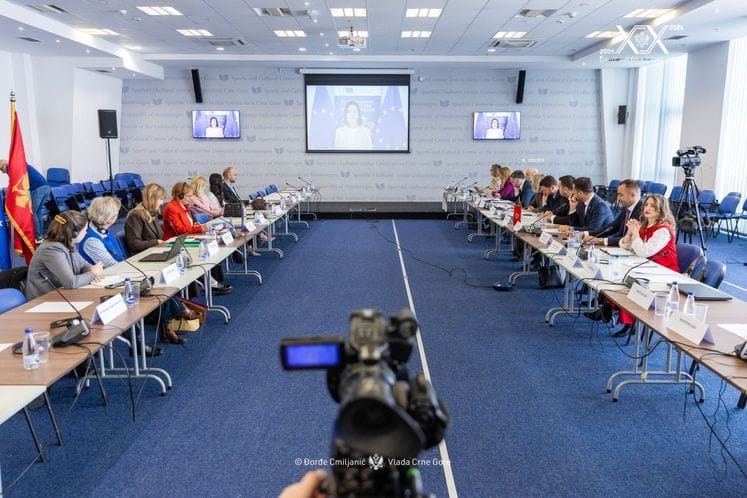
The fifteenth meeting of the Stabilisation and Association Committee between Montenegro and the European Union was held today in Podgorica.
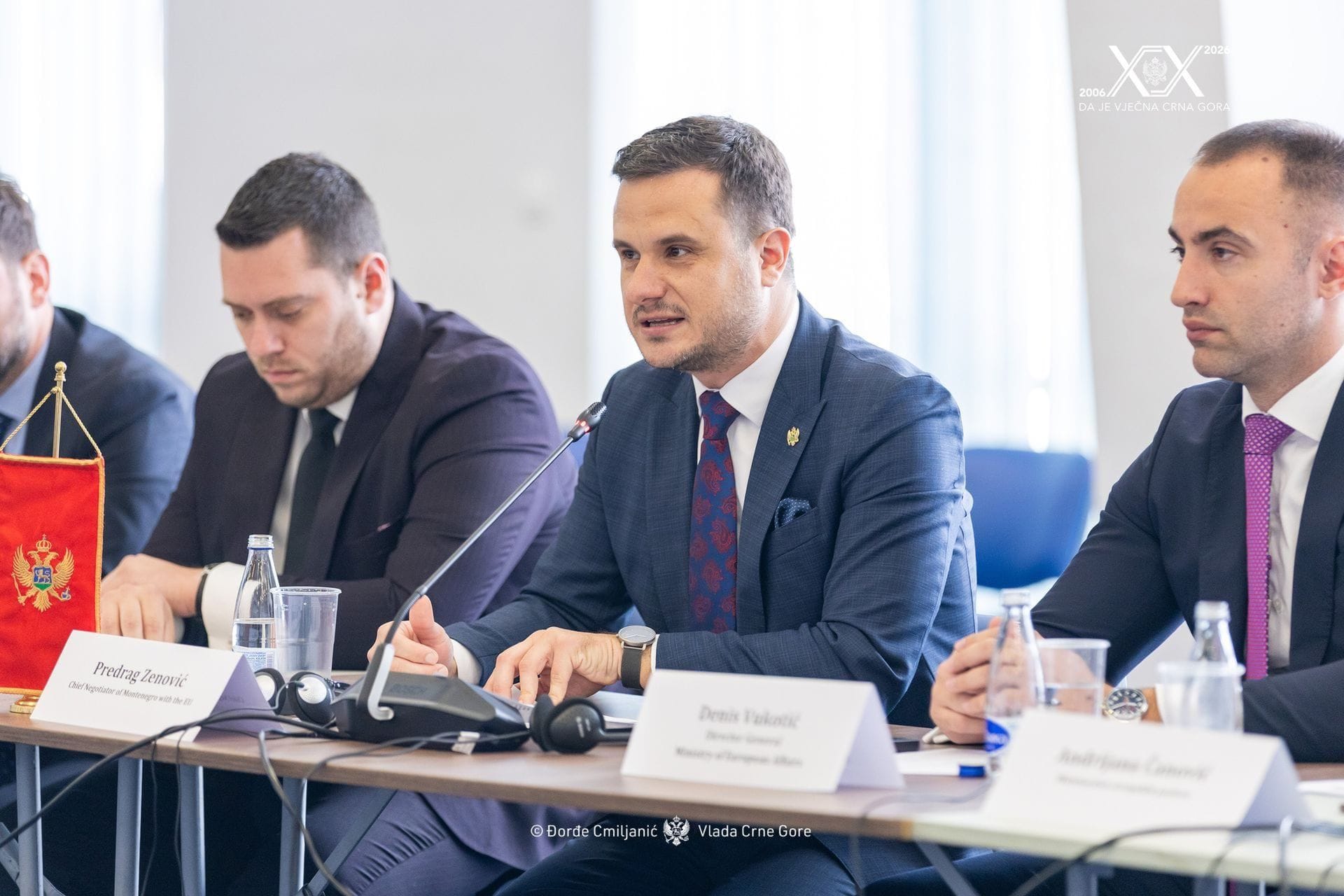
The meeting was opened on behalf of Montenegro by Chief Negotiator Predrag Zenović, and on behalf of the European Commission by Heinke Veit, Deputy Head of the Unit for Montenegro and Bosnia and Herzegovina in DG ENEST.
During the meeting, progress achieved in the areas of political criteria, sectoral subcommittees, and public administration reform was reviewed, along with planned activities since the last Committee meeting in February 2025.
Chief Negotiator Predrag Zenović stated that Montenegro, building on the momentum achieved in the previous period, has managed to translate political commitment into tangible progress.
“Continuous efforts over the past year have led to significant progress, including the provisional closure of six chapters in 2025 and an additional two chapters this year, bringing the total number of provisionally closed chapters to fourteen,” said Zenović.
He noted that in the area of the rule of law, Montenegro has continued to work on key reforms aimed at strengthening the independence, accountability, and efficiency of the judiciary, as well as building credible results in the fight against corruption and organized crime, alongside notable progress in other chapters. He emphasized that efforts have not been focused solely on legislative alignment, but increasingly on effective implementation and enforcement, which is crucial to ensuring that reforms are credible, sustainable, and deliver tangible benefits to citizens.
“We are focused on closing a significant number of chapters during the Cypriot Presidency and creating the necessary conditions to complete the closure of all remaining chapters during the Irish Presidency, ensuring continuity, credibility, and sustained reform momentum throughout the process. In this context, it is essential to preserve inclusive political dialogue and broad societal consensus on EU membership. We are confident that all political actors will continue to demonstrate responsibility and keep the European agenda at the forefront,” Zenović stated.
Valentina Superti, Director for the Western Balkans, emphasized in a video message that this is a decisive phase for Montenegro in the negotiation process and praised the extensive work carried out in the previous period, which resulted in a total of 14 closed chapters.
She noted that, with strong political will, Montenegro can close all remaining chapters, stressing that the Commission remains committed to the goal of Montenegro becoming an EU member. She underlined the importance of accelerating the implementation of the Reform Agenda and continuing to serve as a frontrunner in the negotiation process, achieving the best results and confirming its leading position in the region.
Heinke Veit pointed out the EU’s expectations for the coming period.
“Montenegro remains the most advanced country in the accession process. Now it is important to double your efforts and accelerate reforms in order to achieve results,” Veit stated.
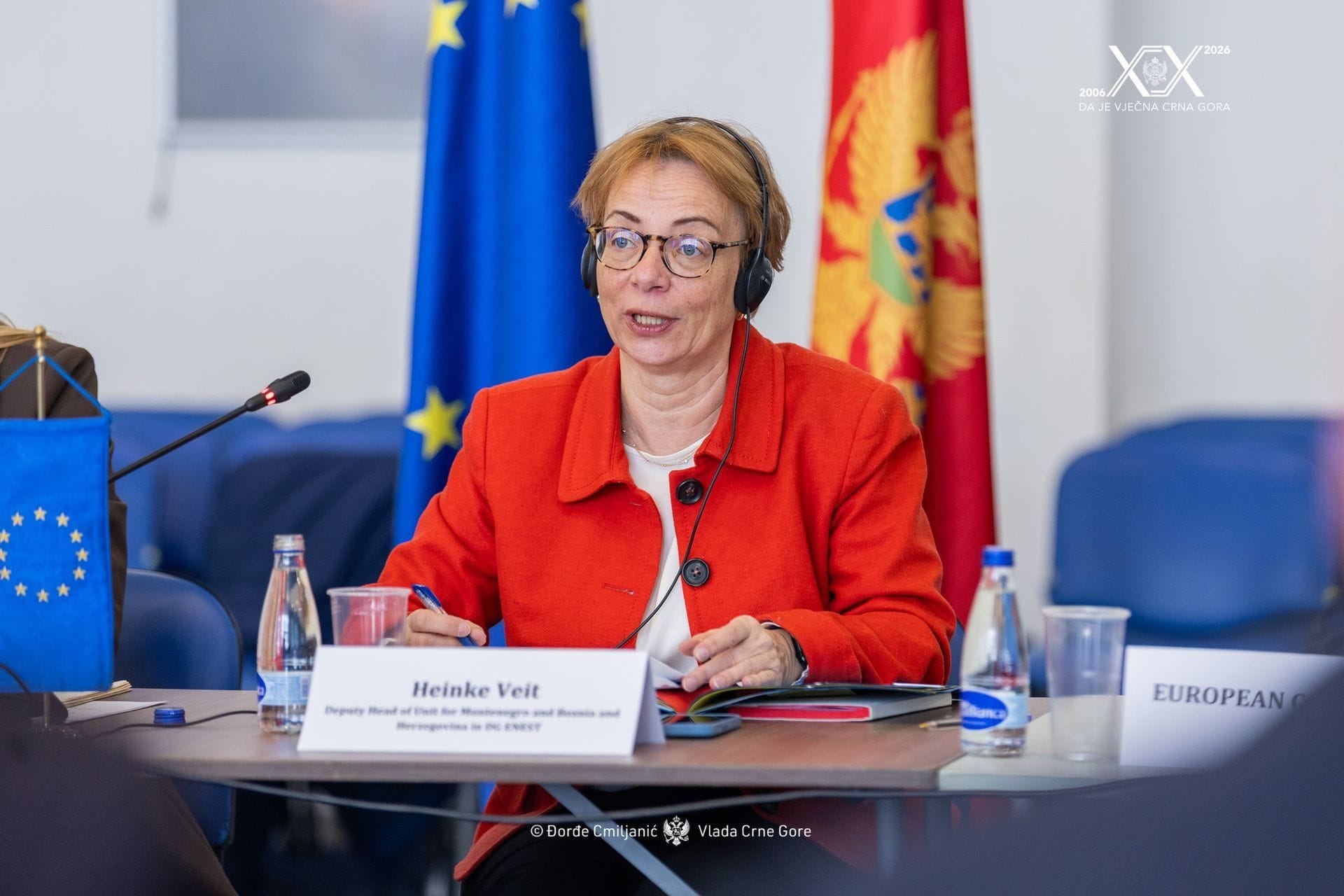
She emphasized the need for Montenegro to continue building and maintaining a broad and strong cross-party consensus on EU-related reforms, highlighting in particular the important role of Parliament in the accession process.
Veit also pointed to the need to strengthen administrative capacities in key institutions and recalled that overall progress in accession negotiations will continue to depend on progress in the rule of law. In addition, she stressed the importance of reforms in public administration and economic development, as well as regional cooperation and good neighbourly relations on the path toward EU accession.