
- Home
Ministry of European Affairs Gorčević in Brussels at the JCC Meeting: Montenegr...
Gorčević in Brussels at the JCC Meeting: Montenegro’s European Future Within Reach

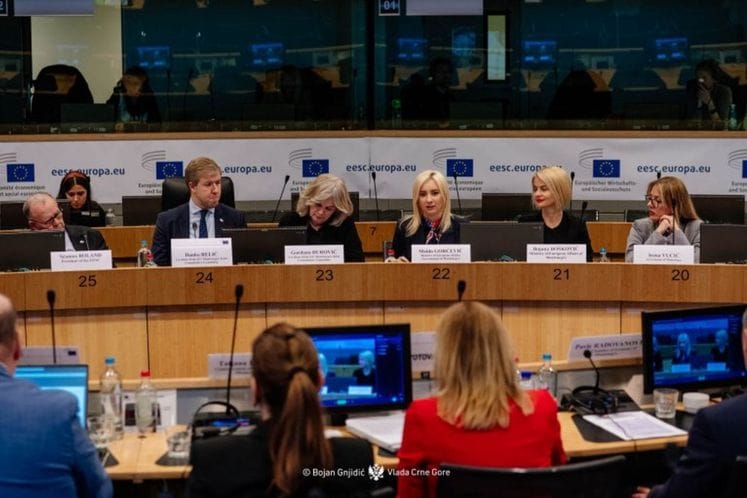
“Montenegro’s European future is within reach. The closure of five negotiation chapters at today’s Intergovernmental Conference in Brussels is a strong confirmation that reforms pay off and that our ambition – to close all negotiation chapters by the end of 2026 – is realistic and achievable. With responsible governance, credible institutions, and unity across all branches of government, we can meet our citizens’ expectations and show that the European Union delivers on its promises,” said Minister of European Affairs Maida Gorčević in Brussels.
She, together with the President of the European Economic and Social Committee (EESC), Seamus Boland, opened the 21st meeting of the EU–Montenegro Joint Consultative Committee (JCC).
The meeting was co-chaired by Danko Relić from the EU side and Gordana Đurović from the Montenegrin side, with participation from representatives of the European Commission, Montenegrin NGOs, trade unions, and employers.
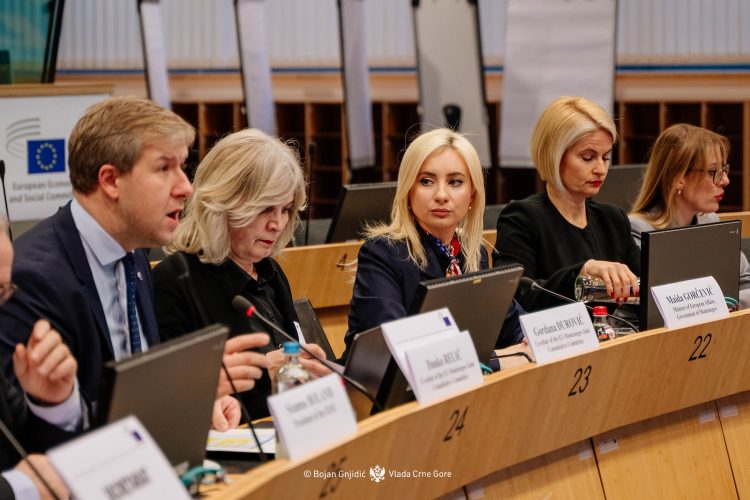
Key aspects of EU–Montenegro relations were discussed at the meeting, with particular focus on the 2025 European Commission Report assessments, implementation of the Reform Agenda for the EU Growth Plan for the Western Balkans, Montenegro’s roadmap for meeting criteria to close negotiation chapters, and the state of civil society and social dialogue in Montenegro.
Minister Gorčević noted that Montenegro is currently the only candidate country to have opened all 33 negotiation chapters, and that the closure of an additional five chapters at today’s Intergovernmental Conference in Brussels represents Montenegro’s greatest achievement in the accession process to date.
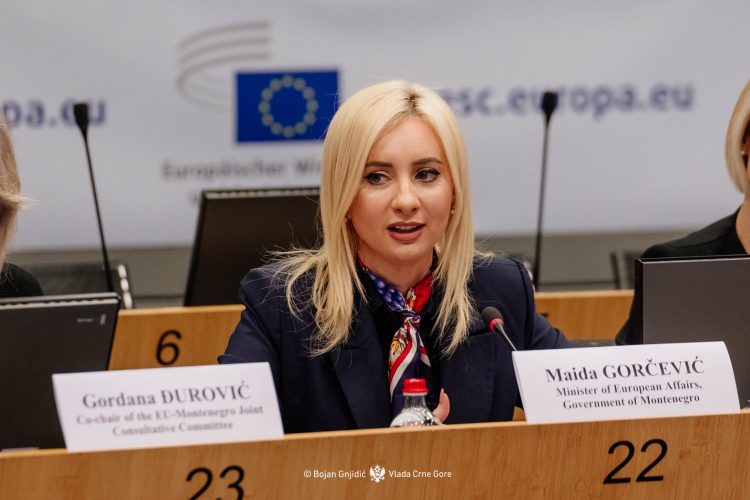
“This is an effort of the entire society: government, institutions, civil society, and, most importantly, the citizens of Montenegro, who consistently support EU membership at around 70 percent. This strong societal consensus is our greatest political capital and additional motivation to accelerate reforms and meet all conditions to close the negotiation process by the end of 2026,” Gorčević emphasized.
EESC President Seamus Boland stressed that genuine involvement of organized civil society is crucial for the success of reforms.
“As Montenegro gradually and securely progresses toward EU membership, active participation of civil society must remain at the heart of the enlargement process to ensure that reforms are grounded in democratic values and have broad citizen support,” Boland said.
Co-chair of the JCC from the Montenegrin side, Gordana Đurović, stated that the closure of five negotiation chapters sends a strong signal to EU institutions and member states that Montenegro is firmly committed to its strategic goal.
“From this meeting, we send a clear message that Montenegro is fully committed to becoming the 28th member of the European Union by 2028. Achieving this goal requires mobilization of all resources – in government, parliament, and judiciary – as well as strong and continuous dialogue with civil society to ensure that the conclusion of negotiations is successful and sustainable,” Đurović said.

EU co-chair of the JCC, Danko Relić, noted that Montenegro has shown that progress toward the EU depends on concrete results.
“Montenegro has demonstrated that advancement toward EU membership is not a matter of political slogans but of results, reforms, and responsible leadership. EU enlargement is based on the individual achievements of each country, with strong social and civil dialogue as a key element of a successful and sustainable accession process,” Relić said.
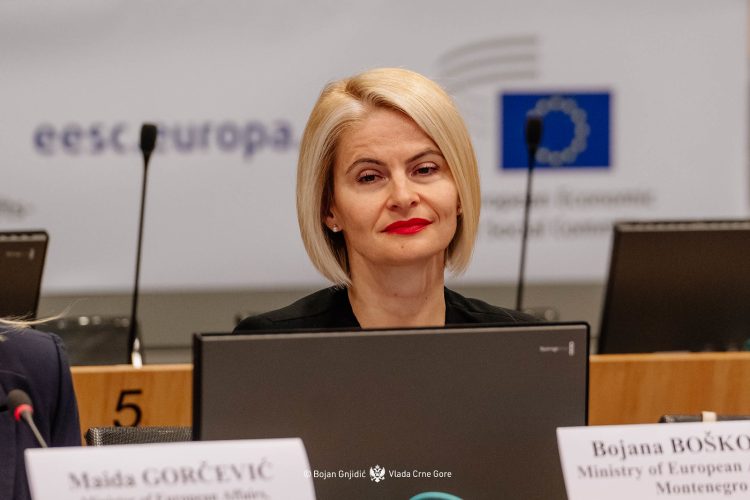
State Secretary in the Ministry of European Affairs, Bojana Bošković, presented Montenegro’s results and ongoing activities in implementing the Western Balkans Growth Plan, emphasizing that this instrument plays a central role in accelerating Montenegro’s socio-economic convergence with the EU and preparing the country for future membership.
Civil society representatives stressed that active, timely, and substantive participation of civil society organizations is crucial in decision-making processes that directly affect citizens, especially in the context of European integration. They highlighted the importance of involving civil society in the legislative process from the earliest stages of drafting laws to ensure that reform solutions are of higher quality, more transparent, and based on the real needs of society.
At the conclusion of the meeting, it was jointly stated that strong political consensus, inclusive dialogue with civil society, and consistent implementation of reforms are key prerequisites for the successful conclusion of negotiations and Montenegro’s full EU membership.

During the meeting, the Joint Declaration of the EU–Montenegro Joint Consultative Committee was adopted by consensus of all participants.
The declaration can be accessed here.
The EU–Montenegro Joint Consultative Committee (JCC) was established under the Stabilization and Association Agreement between the European Union and Montenegro to enable dialogue between civil society, social partners, and institutions, as well as to monitor Montenegro’s progress in the EU accession process.