

- Home
Instead of manipulation, citizens deserve the trut...
Instead of manipulation, citizens deserve the truth and the facts

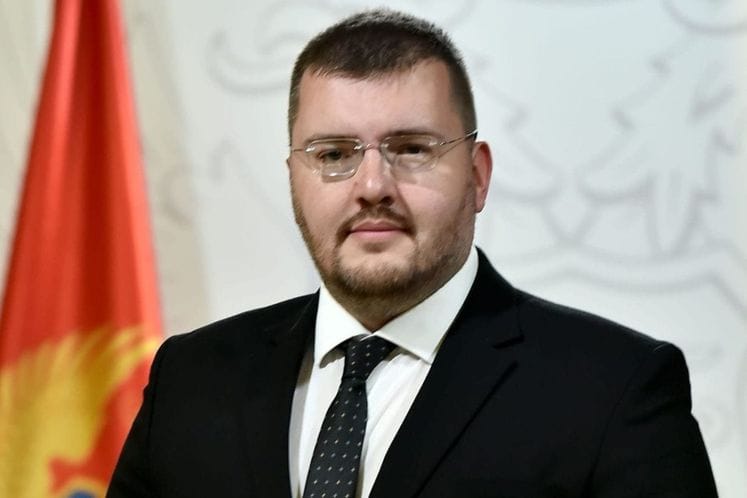
Given that the Parliamentary Inquiry Committee recently discussed the state’s tax revenues related to the Možura project, citizens deserve facts and the truth, rather than manipulation.
First, the shell company Spic Ronghe International Montenegro Limited from Podgorica, which injected €40 million into Možura Wind Park and was subsequently repaid through loans used to purchase turbines, generators, and other wind farm equipment, avoided paying as much as €7,183,634.25 in VAT in 2018 while operating within the Možura project. The tax liability was formally established, its appeals were lawfully rejected, yet the obligation has never been settled. The company’s account has been blocked, and it possesses no assets despite having managed an extraordinary €40 million in a single transaction. The only transaction carried out by the company was the one related to the Možura project, through which it avoided paying the aforementioned VAT liability. This represents a clear case of a fraudulent scheme and a substantial loss to the state – an issue notably omitted by those who praise the “benefits” of the Možura project. Citizens should ask themselves how many public services and public goods could have been financed with such an amount. The company still ranks third on Montenegro’s blacklist of tax debtors, while its total outstanding debt to the state, including accrued interest, has grown to €12.8 million. These facts speak volumes about the actual impact and success of the project, as well as about the motives of those who continue to defend it.
Second, since some continue to highlight the performance of Možura Wind Park and its tax contributions, citizens should also know that the company itself attempted to avoid paying €6,942,447 in VAT. The amount was ultimately collected only after proceedings before the second-instance authority, the Administrative Court, and the Supreme Court. Final and legally valid tax decisions were issued, and the funds collected, only after the change of government. A credible investor does not seek to avoid tax obligations, does not burden the state with lengthy legal proceedings, and should be capable of meeting its tax obligations from the returns generated by a project, provided that the project is economically viable.
The concealment of the actual price and beneficiaries involved in the sale of shares in Možura Wind Park is not only contrary to the legal order and damaging to public trust in institutions, but also directly harmful to the economic interests of Montenegro.
By concealing the true sale value of shares in the Možura wind farm, direct tax damage was inflicted upon Montenegro. Instead of using the actual transaction value of €10.3 million as the basis for tax assessment, the competent authorities were presented with a significantly lower value of €3.5 million. This artificially reduced the tax base and enabled substantial profits to be channelled through an intermediary offshore company beyond the reach of Montenegrin tax authorities. The difference of nearly €7 million is not merely a matter of a concealed and potentially corrupt business transaction that contradicted contractual obligations; it is also a matter of public revenues denied to the citizens of Montenegro. This case demonstrates how concealing the true value of transactions can result in serious damage to the state budget and underscores the need to establish the full responsibility of all parties involved.
The internal audit report from Malta, which I submitted to the Parliamentary Inquiry Committee so that all MPs could understand the scale of the corruption network, explicitly states that the Vujović law firm noted in an email dated 17 December 2015 that “this could also be interpreted by the Tax Administration as an attempt to avoid the full payment of capital gains tax.” That is precisely what occurred, causing damage to Montenegro through a carefully designed scheme. It is therefore surprising that certain MPs either fail to recognise this fact or deliberately misinform the public in an effort to shield key figures associated with corruption under the former regime, thereby demonstrating continuity with those harmful practices.
Furthermore, the report contains information on concealed revenues and contractual breaches involving the domestic company Čelebić, whose owner is also a business partner of former Prime Minister Milo Đukanović. Nevertheless, DPS MPs seek to convince the public – contrary to basic logic – that Đukanović’s business partner independently entered into arrangements with Spanish and offshore companies, bypassing the very contract signed with the Government headed by Đukanović himself.
The report also contains information concerning hidden revenues generated by Adriatic Capital Advisory Ltd., a company that, despite the absence of genuine business activity, recorded exceptionally high revenues and acquired valuable properties in the cadastral area of Donja Lastva, facts that have been documented by numerous Montenegrin journalists.
It is particularly concerning that certain politicians and representatives of the former government devote more energy to downplaying and defending harmful transactions than to demanding that the full truth be established and the damage caused to Montenegro properly assessed. Instead of insisting on transparency, accountability, and the protection of the public interest, they act as advocates for the structures and interests connected to corruption within the Možura project.
Citizens have the right to know where every euro ended up and whether the state budget suffered losses amounting to millions. Anyone attempting to divert attention from these questions or prematurely absolve those responsible sends the message that private and political interests are more important than the interests of the state. Montenegro must not become a hostage to silence, the justification of corruption, harmful transactions, or political protection for those who should be held accountable for actions detrimental to society.