
- Home
Press release from the 96th Cabinet session
Press release from the 96th Cabinet session

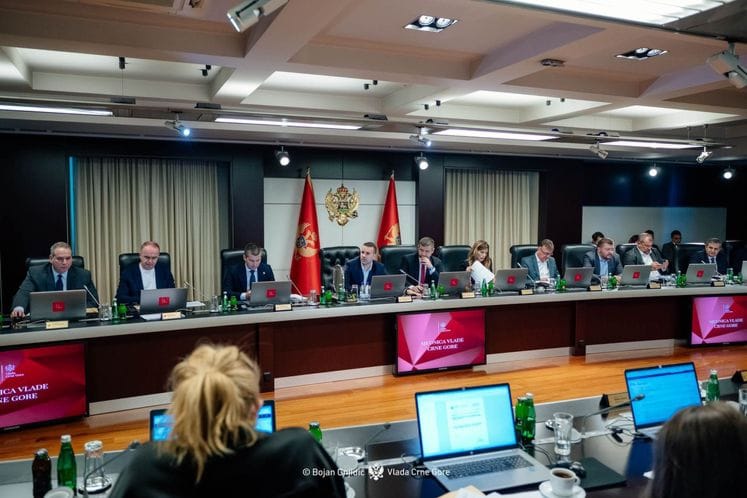
The Montenegrin Cabinet held its 96th session, chaired by Prime Minister Milojko Spajić.
The Cabinet adopted the Draft Law on Higher Education, which defines study programmes as undergraduate, postgraduate, and doctoral. Under the proposed text undergraduate programmes offered at higher education institutions in Montenegro will carry 180 ECTS credits, postgraduate programmes may be organized as specialist studies (one year, 60 ECTS) and master’s programmes (one or two years, 60 or 120 ECTS), doctoral programmes may only be accredited as academic and will carry 180 ECTS credits. Integrated study programmes are also recognized, with 300 or 360 ECTS credits. The reform of the study model aims, among other objectives, to improve the recognition of level VII qualifications within the National Qualifications Framework. The law also introduces mandatory practical training of at least 30 ECTS credits per undergraduate programme, to be carried out either in real work environments or within the institution’s facilities, in line with the programme. Additionally, the draft proposes changes to the functioning and organizational structure of the Agency for Quality Assurance in Higher Education (formerly the Agency for Control and Quality Assurance in Higher Education).
The Cabinet adopted the Draft Law on Amendments to the Law on Flammable Liquids and Gases. The proposed changes designate a single competent authority for issuing licenses, ensuring alignment with energy regulations and comparative practices, while also reducing administrative costs.
The Cabinet approved the Annex to the Contract on Current Maintenance of Public Railway Infrastructure for the period 1 February – 31 December 2025, concluded between the Railway Directorate of Montenegro and Railway Infrastructure of Montenegro. The contract is valued at €9,343,781.46 and covers works and activities outlined in the Programme on current maintenance of civil engineering and electrotechnical infrastructure, as well as financing traffic management and regulation. As the funds allocated by the budget were insufficient to ensure proper maintenance – including urgent landslide repairs, priority procurement of wooden sleepers for tracks and switches, and other materials – the Cabinet, by Conclusion No. 11-011/25-1913/3 of 12 June 2025, approved the use of €2,500,000 from the budget reserve. In line with the Law on Railways, which requires infrastructure to be maintained in a manner that ensures safe and uninterrupted railway operations, the Annex regulates the use of these additional funds.
The Cabinet adopted the Information on the procurement of lambs. On 4 September 2025, a meeting was held between the Ministry of Social Welfare, Family and Demography, the Ministry of Agriculture, Forestry and Water Management, the Pension and Disability Insurance Fund, the Association of Pensioners of Montenegro, and representatives of the meat industry (Mesopromet from Bijelo Polje, MI Goranović from Nikšić, and KD Tuko from Nikšić). The meeting aimed to secure the purchase of surplus lambs from Montenegrin farmers and ensure affordable supply for pensioners, as one of the most socially vulnerable groups. It was agreed to purchase approximately 9,000 lambs, at €4.75 per kilogram, with additional support of €17 per stored lamb for storage and market withdrawal. The Ministry of Agriculture had previously launched a public call for businesses with legally compliant storage capacities to make them available for this purpose. The purchased meat will be distributed to pensioners at a price of €8.50 per kilogram over an eight-month period, starting with the December pension. Subsidies for part of the purchase price will be provided by the Ministry of Social Welfare, Family and Demography, and the Pension and Disability Insurance Fund, ensuring farmers receive guaranteed purchase and payment, while pensioners gain access to quality meat at reduced prices. Pensioners will also be able to pay in eight monthly installments, interest-free. This model addresses seasonal surpluses of lambs, supports farmers in placing products for which there is currently no market demand, and helps pensioners secure affordable, quality food. It also ensures stable cash flow for the meat industry, enabling timely payments to farmers, and thereby maintaining stability across the production and distribution chain. Accordingly, the Ministry of Agriculture, Forestry and Water Management has been tasked with monitoring the 2025 lamb procurement activities, while the Ministry of Social Welfare, Family and Demography and the Pension and Disability Insurance Fund will jointly secure support for this model, providing a total of €320,000.
At the proposal of the Expert Commission formed by the Ministry of Culture and Media, the Cabinet awarded the status of Distinguished Cultural Creator to: Andrija Radulović, Branislav Sekulić, Darko Nikčević, Dimitrije Popović, Dragan Koprivica, Jelena Tomašević, Milutin Mićović, Naod Zorić, Novica Đurić, Radovan Radonjić, Roman Simović, Senad Gačević, Srđa Bulatović, Tomislav Pavićević, and Šerbo Rastoder.
The Cabinet adopted the Information on preparations for Montenegro’s Chairmanship of the Western Balkans Fund (WBF) for the period 1 January – 31 December 2026. This represents an opportunity to further affirm Montenegro as a committed advocate and important actor in strengthening regional relations and cooperation. As the regional frontrunner in the EU integration process, Montenegro will also use its chairmanship to enhance the visibility of its efforts to address shared challenges through a regional lens, contributing to more effective solutions for the Fund and the region as a whole. The chairmanship is expected to further stimulate progress on the EU integration path, focusing on issues central to Montenegro’s and the Western Balkans’ European agenda, and to deepen project cooperation with other WBF member states. This role will reaffirm Montenegro’s dedication to fostering good neighbourly relations and regional cooperation – elements highlighted as essential in the latest European Commission reports on Montenegro’s integration process. The Ministry of Foreign Affairs has been tasked with defining the chairmanship’s priorities and calendar, taking into account the needs of the WBF, the region, and the state itself. In preparation, consultations were held in May and June 2025 with the WBF Executive Director and Secretariat. As emphasized during the Government’s discussion, the presiding country defines the priorities of the chairmanship and bears responsibility for their coordination, implementation, and success.
