

- Home
Press release from the 99th Cabinet session
Press release from the 99th Cabinet session

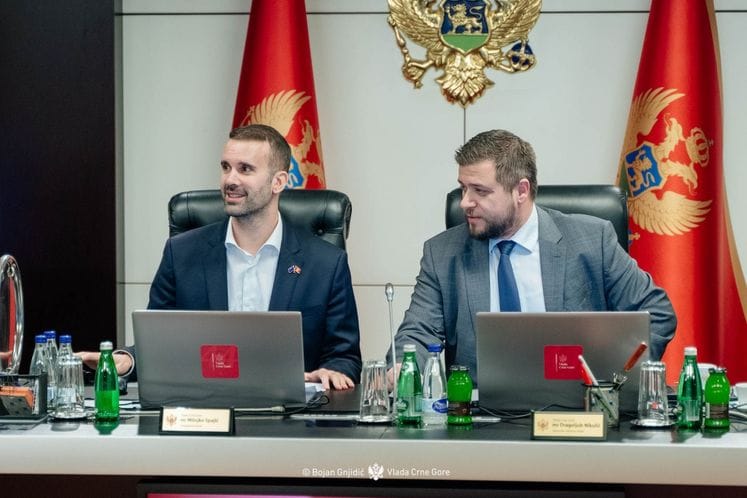
The Montenegrin Cabinet held its 99th session today, chaired by Prime Minister Milojko Spajić. The Cabinet adopted the Draft Law on International Legal Assistance in Criminal Matters. The Law on International Legal Assistance represents a lex specialis and an important segment of the international legal assistance framework in criminal matters. Although this area is largely regulated by bilateral agreements that Montenegro has signed with other countries, as well as by ratified multilateral conventions, this law constitutes an integral part of the overall system of international legal assistance that domestic judicial authorities apply – both when requesting legal assistance from foreign countries for the purposes of criminal proceedings and when providing such assistance at the request of foreign competent authorities. The need to adapt the international legal assistance system to modern challenges, developments and dynamics at the European and international levels, as well as the aspiration to modernise legal instruments, have also necessitated the adoption of this law. To ensure greater efficiency, unlike the existing law, the new solution provides that detention for extradition purposes, ordered by a court, shall remain in force throughout the entire extradition procedure until the enforcement of a final court decision or the decision of the Minister of Justice on extradition, or until the surrender and handover of the accused to the requesting state in cases where extradition has been approved. This ensures the proper implementation of final and enforceable decisions in extradition proceedings, the execution of extradition, and compliance with Montenegro’s international obligations and European and international standards in the field of extradition. Furthermore, the application of certain existing legal provisions in practice has created ambiguities and uncertainties. Therefore, it has become necessary to clarify and regulate in more detail the provisions related to the competences of authorities and the procedures before them, in order to eliminate problems in the application of individual institutes that are crucial for the efficient functioning of competent authorities within the system of international legal assistance. In this regard, the Law aims to achieve a higher level of alignment with the general and key instruments of the Council of Europe conventions that Montenegro is a party to, in order to ensure their more effective implementation and harmonisation with international practice in providing international legal assistance in criminal matters.
The Cabinet adopted the Draft Law on Amendments to the Law on Financing Local Self-Government. The main reason for adopting this law is the introduction of an additional criterion for determining a municipality’s right to use funds from the Equalisation Fund. Specifically, in addition to the municipality’s development level, it is proposed that the share of its current revenues in the total current revenues of all municipalities (excluding Equalisation Fund transfers) must be below 10% to qualify. The proposed measure aims to direct Equalisation Fund resources towards municipalities with lower fiscal capacity and limited ability to generate their own revenues, ensuring a fairer allocation of funds in line with the principles of fiscal balance, regional cohesion, and sustainability of local budgets. Introducing this new criterion allows the Equalisation Fund mechanism to focus on municipalities most in need of such support, thereby strengthening the sustainability and stability of the local government financing system. For the same reason, the proposed amendments abolish the advance (provisional) payments from the Fund, thereby increasing transparency, efficiency, and reducing administrative procedures.
The Cabinet adopted a Decision on the Distribution of Profits of “Montenegro Airports”. Accordingly, the company was instructed to allocate the profit generated for 2021, 2022, 2023, and 2024, determined at €22,915,410, as follows: €15,905,124 shall be used to cover losses from previous years; €7,010,286 shall be distributed as follows:
- 70% to the founder, amounting to €4,907,200, i.e. €4,171,120 after a 15% withholding tax (€736,080);
- 30% as retained earnings of the company, in the amount of €2,103,085.
The amount payable to the founder shall be reduced by €182,009 (overpaid share from 2019 profit distribution) and increased by €134,756 (recorded in the company’s accounts as a liability to the founder for participation in profit from previous years), resulting in a total transfer of €4,123,867 to the founder.
Funds belonging to the Budget of Montenegro – amounting to 70%, i.e. €4,123,867 – shall be earmarked for financing the programme to enhance Montenegro’s air accessibility, in accordance with a plan to be determined by the Ministry of Finance and the Ministry of Transport, and in line with state aid rules.
The Cabinet adopted the Information on the Necessity of Constructing Border Control Posts for Veterinary and Phytosanitary Controls at six locations in Montenegro. These control posts will handle veterinary and phytosanitary checks of goods, live animals, plants, seeds, planting material, fresh fruits and vegetables, etc. In line with European recommendations, one control post should be established for each neighbouring country, as well as one at an airport and one at a seaport. If, upon Montenegro’s accession to the EU, no border crossing point is built according to EU standards and recommendations, the respective crossing will, by law, be closed for the transport of food products, plants, and live animals.
Based on previous experience and traffic data from existing crossings, it is necessary to establish the following border control posts:
- BCP Dobrakovo (border with Serbia)
- BCP Ilino Brdo (border with Bosnia and Herzegovina)
- BCP Božaj (border with Albania)
- BCP Kula (border with Kosovo)
- BCP Golubovci Airport, and
- BCP Port of Bar
Accordingly, the Government granted consent for the implementation of all necessary activities to ensure the prompt and efficient construction of the above-mentioned border control posts.
